
Your kitchen outlet pops. Then it smells like burnt toast. It’s Friday night, and you’re worried.
A neighbor knows a guy. He’ll come tomorow, cash only. His price is half of what the other companies quoted. Sounds like a win, right?
Maybe. Maybe not.
Here’s the thing. In Florida, wiring is not a weekend hobby for anyone with a drill. State law says most electrical jobs need a licensed pro. That rule isn’t red tape. The wires in your walls work like the nerves in your body. When they fail, you feel it fast.
This guide keeps it simple. You’ll learn what a license really means. You’ll see the real risks. You’ll also learn how to check someone in about five minutes.
We’re Flowtron Electric Inc., based in Miami-Dade County. We’ve seen both sides of this story. Grab a coffee and let’s dig in.
Why Florida Requires Electrical Licensing
Electricity doesn’t give second chances. A loose wire can sit quiet for years. Then one humid August night, it heats up inside your wall. You don’t see it. You don’t hear it. You just wake up to smoke.
Florida lawmakers know this. So the state sets rules for who can work on your wiring. The goal is simple. Keep homes, families, and neighbors safe.
Think of a license like a seatbelt. You hope you never need it. You’re sure glad it’s there when things go sideways.
Florida also has a long storm season. Power surges, flooding, and generators all test your wiring. A wrong connection might not fail today. It might fail during the next hurricane, when no one can come fix it. Good work done right the first time is worth real money.
State Licensing Requirements
Florida licenses electrical contractors through the Department of Business and Professional Regulation. People call it the DBPR. A state board inside it, the Construction Industry Licensing Board, sets the rules. The main law sits in Chapter 489 of the Florida Statutes.
Getting a license takes real work. A contractor has to clear several hurdles.
- Show work experience. Years on real job sites count.
- Pass state exams. They cover code, safety, and business rules.
- Prove financial stability. The state wants to know they can pay their bills.
- Pass a background check. Not everyone makes the cut.
- Meet insurance rules. Coverage isn’t optional.
- Keep learning. Licenses expire, and renewal means continuing education.
That list filters out a lot of folks. It’s supposed to.
Here’s why that matters to you. Every item on that list protects something. The exam proves they know the code. The insurance rules protect your home. The background check protects your family when a stranger walks inside.
Who Can Legally Perform Electrical Work
Three groups can legally do electrical work in Florida.
- Certified electrical contractors. They hold a state license and can work anywhere in Florida.
- Registered electrical contractors. They hold a local license and work only where they’re registered.
- Supervised workers. Apprentices and helpers can work under a licensed contractor’s watch.
That last group matters. The contractor’s license covers the crew. So the contractor answers for their work too.
What about homeowners? Florida lets owners do some work on their own homes with a permit. Strict rules apply, and you can’t hire unlicensed help. Tiny jobs like swapping a bulb need no license at all. Ask your city before you start anything bigger.
One more thing. A business tax receipt isn’t a contractor license. Plenty of people mix those up. Some unlicensed workers wave one around like a golden ticket. It’s not.
Licensed vs. Unlicensed Electricians: Key Differences
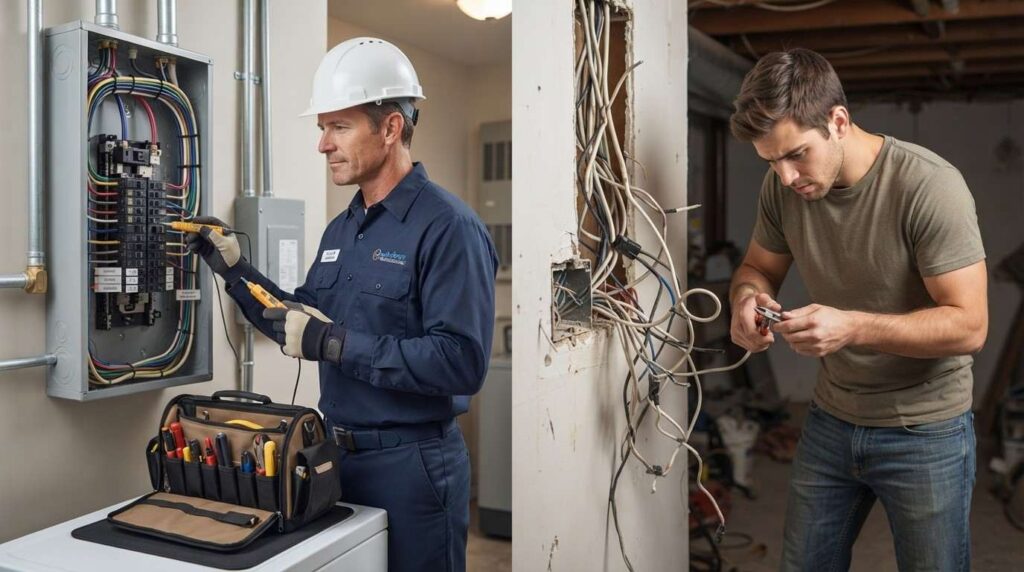
Two electricians can look the same in your driveway. Same truck, same tools, same friendly smile. The paperwork is where they split. Here are the four big differences.
Legal Authorization
A licensed electrician has the state’s permission to do the work. An unlicensed one doesn’t. It’s that simple.
Skill isn’t the issue here. A guy can be great with wires and still break the law. A license doesn’t promise perfect work either. But it does prove he cleared the state’s bar.
A licensed electrician must follow the code even when it’s slower. An unlicensed worker has no board watching. Nobody checks his work unless something goes wrong.
Permit Responsibility
Most electrical jobs need a permit. Think new circuits, panel upgrades, rewiring, EV chargers, and whole-home generators.
A licensed contractor pulls the permit under their own name. They book the inspection. They fix anything the inspector flags.
An unlicensed worker can’t pull permits. So they skip them. Or they ask you to pull one as the “owner.” That shifts the risk onto you. Not a fun trade.
Here’s a real-life example. A homeowner adds a hot tub and skips the permit. The wiring looks fine. Two years later, the buyer’s inspector spots it. Now the seller pays for a fix before closing.
Accountability and Consumer Protection
A licensed electrician has something to lose. Their license. If they cut corners, you can file a complaint with the DBPR. The state can fine them, suspend them, or pull the license.
An unlicensed worker has nothing at stake. If the job goes bad, they can ghost you. Then you’re left with a phone number that never rings.
Documentation and Credentials
Licensed pros leave a paper trail. You should get:
- A license number you can verify
- A certificate of insurance
- A written contract
- A copy of the permit
- A record of the passed inspection
Unlicensed workers usually leave a text thread and a payment app receipt. That’s not much to hold up when something breaks.
Keep all of it in one folder. You’ll need it for insurance and resale.
Licensed Electricians in Florida
Let’s look closer at what “licensed” really means. Not every license works everywhere. That surprises a lot of homeowners.
Certified (EC) vs. Registered (ER)
Florida has two main types of electrical contractor licenses.
- Certified (EC). The state issues it. It lets the holder work anywhere in Florida. The license number starts with “EC.”
- Registered (ER). The holder passed a local exam. They register with the state, but they can only work in the area that licensed them. The number starts with “ER.”
Here’s a tip for Fort Lauderdale homeowners. If someone shows you an ER number, ask where they’re registered. An ER from another county can’t work in yours. Check it before you sign.
Both types are real licenses. Neither one is safer than the other. The difference is where they can work. So match the license to the job site.
Permits and Local Codes
Florida follows the Florida Building Code. Its electrical rules build on the National Electrical Code. Cities and counties add their own steps on top. South Florida has extra worries too, like high winds, flood zones, and salty air.
Licensed electricians know these rules. They also know what inspectors look for, like:
- Proper grounding
- GFCI protection near water
- Correct wire sizes
- Safe breaker panels
- Clean, labeled connections
Generators are a good example. A hurricane generator needs a proper transfer switch and a permit. A shortcut can send power back into the lines. That can hurt a utility worker. Licensed pros don’t gamble on that.
Insurance Protection
Licensed contractors must meet insurance rules. Two types matter most.
- General liability. It helps pay if the work damages your property.
- Workers’ compensation. It covers a worker who gets hurt on the job.
In Florida, we don’t wait for the storm to buy shutters. Insurance works the same way. You want it in place before you need it.
Now picture the other side. Who pays when an unlicensed worker falls off your ladder? Sometimes the homeowner ends up facing the bill. That’s a rough way to save a few hundred bucks.
Fort Lauderdale Specific Risks
Fort Lauderdale is a great place to own a home. It’s also tough on wiring. Salt air eats metal. Humidity creeps into panels. Storms knock out power and bring a rush of repair work.
Many homes from the 1950s through the 1980s still run on old systems. Some old panel brands have known problems. Good workmanship matters more here. A sloppy job gets tested hard near the coast.
Canals and high water tables add another twist. Outdoor outlets, pool pumps, dock lights, and boat lifts all mix water and power. That mix is unforgiving. A trained electrician knows how to bond and ground those setups the right way.
Key Legal and Financial Risks
Here’s what can go wrong when you hire someone without a license.
Illegal Contracts
Under Florida law, an unlicensed contractor generally can’t enforce a contract in court. That sounds like good news for you. It rarely is.
You still have bad wiring in your wall. You still have a missing worker. And getting your money back can mean a long fight. The contract might be weak on paper. Your problem is still very real.
Think about it. If something goes wrong, the paper you signed may not help you. You’d be arguing over a deal the state never approved.
Voided Insurance
Say a fire starts from unpermitted wiring. Your insurer will look at the cause. They can deny or cut your claim if the work broke the rules. That’s a huge hit.
It shows up at other times too. Many Florida insurers ask for electrical inspections on older homes. Buyers order them as well. Unpermitted work can sink a sale or force costly redo work.
Always tell your insurance company about big electrical upgrades. Keep the permit and inspection papers handy. They prove the work was done by the book.
No Recovery Fund Access
Florida runs the Homeowners’ Construction Recovery Fund. It can repay homeowners who lose money to a licensed contractor’s fraud or poor work. Payouts are capped. Check the current limit with the DBPR.
Here’s the catch. The fund covers work done by licensed contractors only. If you hire an unlicensed worker, you can’t file a claim. You’re on your own.
Criminal Penalties
Unlicensed contracting is a crime in Florida. A first offense is generally a first-degree misdemeanor. Repeat offenses can become felonies. During a declared state of emergency, like a hurricane, even a first offense can be a felony.
Hurricane season also brings storm chasers. They roll in after the wind dies down. They knock on doors with low prices and big promises. A real pro will still be around after the cleanup crews leave.
Ask neighbors who they trust. Then still check the license yourself.
The penalties land on the worker. But the mess lands on you.
Warning Signs an Electrician May Be Unlicensed
Most unlicensed workers aren’t villains. Some are decent folks who skipped the paperwork. But the risk to you stays the same. Watch for these four signs.
Refuses to Provide a License Number
Real pros give it fast. In Florida, ads must show the contractor’s license number. You’ll see it on trucks, websites, and quotes.
If he dodges, stalls, or says “I’ll text it later,” pause. Say “no problem, I’ll wait.” Then watch what happens. Honest pros usually answer in seconds.
Avoids Permits
Listen for lines like these:
- “You don’t need a permit for this.”
- “The city never checks.”
- “A permit will just cost you more.”
These are all red flags. Permits are how the city checks safety. Skipping them skips the second pair of eyes. That’s definately not worth it.
Offers Unusually Low Quotes
A very low bid is a shiny lure, and you’re the fish. Licensed pros pay for insurance, permits, training, and tools. Those costs show up in the price. An unlicensed worker skips them, so he can charge less.
Also watch for cash-only deals and huge upfront deposits. Get three quotes. Compare the scope of work, not just the total.
Ask yourself what he’s cutting. It could be the permit. It could be the insurance. It could be the quality of the wire. Someone always pays for that cut, and it’s usually you.
Cannot Provide Proof of Insurance
Ask for a certificate of insurance. A real contractor can email it in minutes. If you hear “I’m covered, trust me,” that’s a no.
Better yet, call the agent listed on the certificate. Make sure the policy is active. It takes two minutes.
Watch for old certificates too. Check the policy dates. Some people show last year’s paper and hope you won’t look.
How to Verify an Electrician in Fort Lauderdale
Checking takes about five minutes. Do it every time, even for referrals. Your cousin’s friend might be great. He might also have let his license lapse.
Verify Online
Follow these steps:
- Go to the DBPR license search at myfloridalicense.com.
- Search by name, business name, or license number.
- Check that the status says current and active.
- Confirm the license type is EC or ER.
- Look at the expiration date.
- Scan for past complaints or discipline.
- Make sure the name matches the quote and the contract.
For ER holders, also call the local licensing office. Confirm they can work in your area.
Take a screenshot of the search result. Save it with your quote. If the license shows a problem, walk away politely. You can always find another electrician.
Confirm Insurance
Ask for the certificate of insurance. Look at the dates and the coverage types. Then call the agent to confirm.
Florida also has an online tool to check workers’ comp coverage. The state’s Division of Workers’ Compensation runs it. Search by the contractor’s business name.
Save copies of everything. Email them to yourself. You’ll thank yourself later.
Questions to Ask Before Hiring an Electrician
Keep this list on your phone. Read it out loud on the call. A good electrician won’t mind. A shady one will squirm.
Ask for the License Number
Say it plain: “What’s your license number? Is it EC or ER?” Then verify it right there. Don’t wait until after the job.
Ask Who Will Perform the Work
Some companies send a crew you’ve never met. That’s normal. But ask a few questions.
- Will the licensed contractor be on site?
- Are the workers employees or subcontractors?
- Are the subcontractors licensed too?
You want to know exactly who’s touching your panel.
Big jobs often use more than one trade. That’s fine. Just make sure each person on your property is covered.
Ask About Permits
Ask, “Will you pull the permit?” Then ask, “Who books the inspection?” The answer should be “we do.”
Request a copy of the permit and the final inspection sign-off. Keep them with your home records. They’ll help when you sell.
Ask for a Written Agreement
Never rely on a handshake. A good contract lists:
- The full scope of work
- Materials and brand names
- Total price and payment schedule
- Start and finish dates
- Warranty terms
- The contractor’s license number
Read it before you sign. Never sign a blank page. If something feels off, say so. A good contractor will fix the paper, not argue.
Also ask about the warranty. A good contractor stands behind their work. Ask how long it lasts, what it covers, and who to call. Get the answer in writing.
Final Thoughts
Hiring an electrician isn’t about picking the cheapest or the fastest. It’s about picking the one who’ll stand behind the work.
A license shows training. A permit shows oversight. Insurance shows they plan to be around. Together they protect your home, your wallet, and your sleep.
Fort Lauderdale homes deserve safe wiring. So do the families inside them. Take your time. Compare quotes. Ask the tough questions. A good electrician will respect you for it. The ones who get annoyed are telling you something.
Want a second opinion on a quote? Flowtron Electric Inc. is happy to talk it through. We’re based in Miami-Dade County and we answer straight. Call us at (954) 945-1123.
Frequently Asked Questions
1. Is it illegal to hire an unlicensed electrician in Florida?
The law mostly targets the worker. Offering electrical work without a license is illegal in Florida. But you take on the risks if you hire one. Those include no permit, a denied insurance claim, and no recovery fund help.
Checking a license takes five minutes. Cleaning up a mess takes months.
2. What’s the difference between an EC and an ER electrician?
An EC holds a state certification and can work anywhere in Florida. An ER holds a local license and works only in the area that issued it. Always ask which one you’re hiring.
3. How do I check an electrician’s license in Fort Lauderdale?
Use the DBPR license search at myfloridalicense.com. Search by name or license number. Confirm the status is current and active. Check the license type and look for past discipline. For ER holders, call the local licensing office too.
4. Do I need a permit for electrical work in Fort Lauderdale?
Most work beyond small repairs needs one. That includes panel upgrades, new circuits, rewiring, EV chargers, and generators. Rules vary by city. Call your local building department or ask your licensed electrician.
5. What can I do if an unlicensed electrician damaged my home?
Start by hiring a licensed electrician to inspect the work and make it safe. Take photos and save all texts and receipts. You can file a complaint with the DBPR. Talk to a Florida attorney too. We’re not lawyers, so get legal advice for your case
