
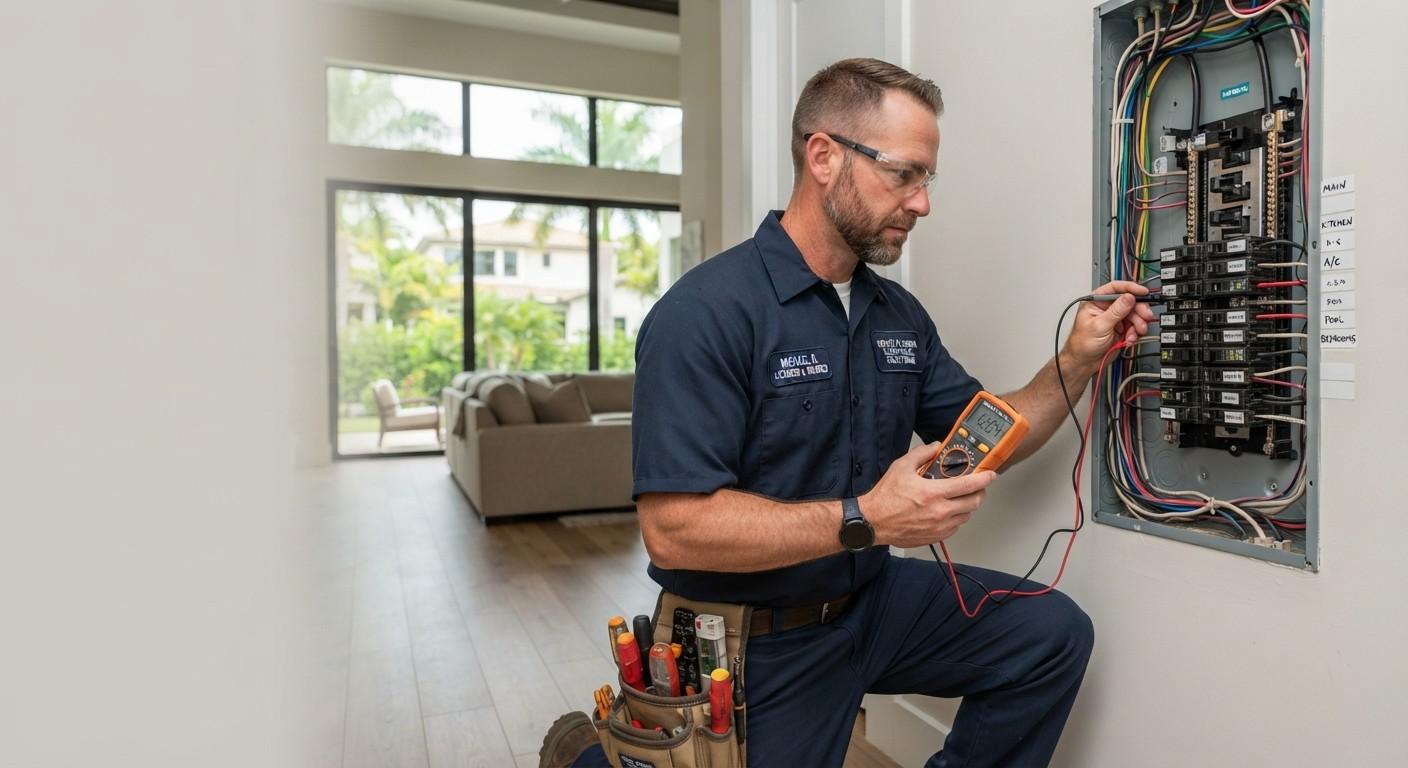
The power flickers at 9 p.m. Your phone is at 12 percent. Who do you even call?
Most of us ignore wiring until it breaks. Then we grab the first name on Google and hope for the best. That hope can get pricey.
Bad electrical work doesn’t just waste money. It can fry your appliances, fail an inspection, or start a fire. Nobody wants that story.
This guide walks you through the whole choice. We cover licenses, costs, local quirks, and what a good quote should say. We wrote it from the Flowtron Electric side of the truck, so expect honest talk.
Hiring an electrician is like picking a pilot. You don’t want the cheapest one. You want the one who’s flown through storms before.
Check Licensing and Insurance
Start here, every time. A license check takes five minutes. It filters out a lot of trouble.
A licensed pro has passed exams and knows the code. An unlicensed one is guessing, and your house is the test.
Verify State Licenses
Florida licenses electrical contractors through the Department of Business and Professional Regulation. You can look up any license online for free.
Ask for the license number. Then search it yourself. Here’s what to check:
- License type. Certified licenses (EC) work statewide. Registered licenses (ER) work only where the contractor registered.
- Status. It should say active.
- Name match. The name must match the company on your quote.
- Complaints. Look for past discipline or open cases.
If a company dodges the question, walk away. A real pro hands over the number with no sighing.
Request Proof of Insurance
Next, ask for a certificate of insurance. A verbal “yeah, we’re covered” isn’t proof.
You want two kinds. General liability covers damage to your home. Workers’ compensation covers injuries on the job.
Why does it matter? If a worker gets hurt and has no coverage, you could end up holding the bill. Certificates can also go out of date. A quick call to the insurer fixes that.
Understand Local Expertise
An electrician from Ohio learned different lessons than one from South Florida. Our heat, salt, storms, and fast growth all leave marks on wiring.
Climate Challenges
Our air is wet and salty. Metal rusts fast here. Outdoor panels, boxes, and fittings take a real beating.
Then comes hurricane season, which runs June 1 through November 30. Surges, flooding, and wind hit homes hard. A local pro asks smart questions. Is your panel off the ground? Are outdoor outlets sealed? Do you have surge protection?
Backup power needs care too. A bad generator hookup can send power back into the grid. That puts line workers at risk.
Code Compliance
Florida follows the Florida Building Code and the National Electrical Code. Cities and counties can add their own rules.
Codes change over time. A pro who works here every week keeps up. Ask, “Which code do you follow for this job?” A calm, clear answer is a great sign.
Code isn’t red tape. It exists because wiring mistakes start fires.
Compare Costs and Quotes
Price matters. Nobody loves a surprise bill. But the lowest number rarely wins.
Around here we say, “When it rains, it pours.” Bad wiring bills work the same way. One cheap shortcut can turn into three repairs.
Hourly Rates
Some electricians bill by the hour. Rates vary by company, job type, and time of day. Nights and weekends often cost more.
Hourly billing fits small, unclear jobs. Think of a dead outlet. Nobody knows the cause untill someone looks. Ask these questions:
- What’s your hourly rate?
- Is there a minimum number of hours?
- When does the clock start?
- How do you bill for extra helpers?
Service Fees
Many companies charge a service fee. It covers the visit and the first look. Some apply it to the final job. Others don’t. Ask before you book.
Also ask about permit fees, disposal fees, and after-hours charges. Get every fee in writing.
Collect at least three quotes. Don’t just compare the bottom line. Compare what’s inside. One quote may skip the permit. Another may use thinner wire. Same price on paper. Totally different job.
A price is like a menu photo. It looks great until the plate shows up.
Check Experience With South Florida Challenges
Experience isn’t just years on the job. It’s years on our kind of job. This is where a local company like flowtron electric earns its keep.
Weather-Rated Equipment
Outdoor gear needs the right rating. Look for weatherproof covers, wet-location fixtures, and corrosion-resistant parts. Salt air eats cheap hardware for breakfast.
Ask what materials they use and why. A good electrician explains it in plain words. Also ask about whole-home surge protection. It guards your TV, fridge, and AC when storms roll in.
Historical Neighborhood Systems
Fort Lauderdale has older streets with real character. Many of those homes also have older wiring. Here are common trouble spots:
- Two-prong outlets with no ground
- Old fuse boxes
- Panel brands with known safety problems, like Federal Pacific and Zinsco
- Aluminum branch wiring in some homes from the 1960s and 70s
- Overloaded circuits from new ACs, pools, and gadgets
A pro with older-home experience won’t panic. They map it out. They tell you what to fix now and what can wait. That feels like relief.
Local Permitting
Many jobs need a permit. Panel swaps, new circuits, and service upgrades usually do. Rules vary by city, so check with your local building department.
A good electrician pulls the permit for you. They know the forms. They book the inspection too.
Be careful if someone says, “We can skip the permit.” It saves a few bucks today. It can cause big headaches with insurance or a home sale later. Ask, “Who pulls the permit, and is the fee in the quote?”
Evaluate Local Reviews and Warranties
Reviews tell you what a brochure won’t. Check Google, Yelp, Nextdoor, and the Better Business Bureau.
Don’t just count stars. Read the middle ones. Four-star reviews are often the most honest. Look for patterns:
- Did they show up on time?
- Did they explain the work?
- Did they clean up?
- How did they handle a problem?
Everyone has a bad day. Watch how the company replies. A calm, kind answer says a lot about trust.
Ask your neighbors too. A name passed over the fence beats any ad. It gives you a sense of belonging, like the whole block vouches for the guy.
Then ask about warranties. A warranty is a handshake with a paper trail. Find out how long labor is covered. Ask if parts carry a maker’s warranty. Make sure it’s in writing. And ask who you call if a breaker trips next month.
Match the Electrician to Your Electrical Project
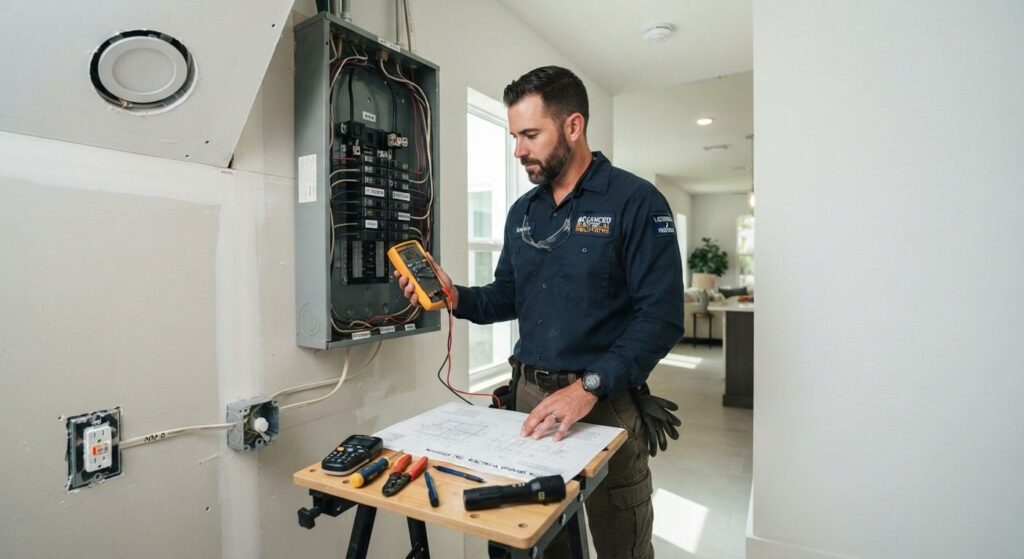
Not every electrician loves every job. Some thrive on quick service calls. Others live for big remodels. Match the pro to the project.
Residential Electrical Repairs
Flickering lights, dead outlets, and tripping breakers are repair jobs. You want someone who finds the cause, not someone who swaps parts and hopes.
Ask how they diagnose problems. A good answer includes testing. At Flowtron Electric, we like to find the root cause before we replace anything.
Electrical Panel and Circuit Work
Your panel is the traffic cop of your home. It tells every circuit where to go. If it’s old or overloaded, trouble follows. Signs you may need an upgrade:
- Breakers trip often
- The panel feels warm or smells burnt
- Lights dim when the AC kicks on
- You’re adding an EV charger or big appliance
For bigger jobs, ask for a load calculation. It shows if your home can handle the new demand. Panel work needs a permit and an inspection. No exceptions.
Lighting and Wiring Projects
Recessed lights, ceiling fans, and outdoor lighting look simple. They aren’t always. Hidden wires, tight attics, and old insulation make things tricky.
Ask for photos of past work. Ask how they plan the layout. A good pro thinks about how you live, not just where the holes go. Great lighting also brings pride. You’ll notice it every night.
Check the Written Scope of Work
A text message isn’t a quote. Get a written scope of work. It protects both sides and keeps surprises small.
Materials and Labor Included
The scope should list what gets installed. That means brands, wire sizes, breaker types, and fixtures. It should also list labor, like crew size and number of days.
Repairs and Replacements Listed
“Replace three outlets” is different from “repair the circuit.” Say which one you’re paying for. A clear list ends arguments before they start.
Additional Work Clearly Defined
Surprises happen behind walls. Good contractors plan for that. The scope should say how extra work gets approved and priced.
Nothing extra should start without your okay. Ask for a written change order. It keeps trust high on both sides.
Ask About Electrical Safety and Testing
Safe work leaves proof. Ask to see it.
Electrical Testing
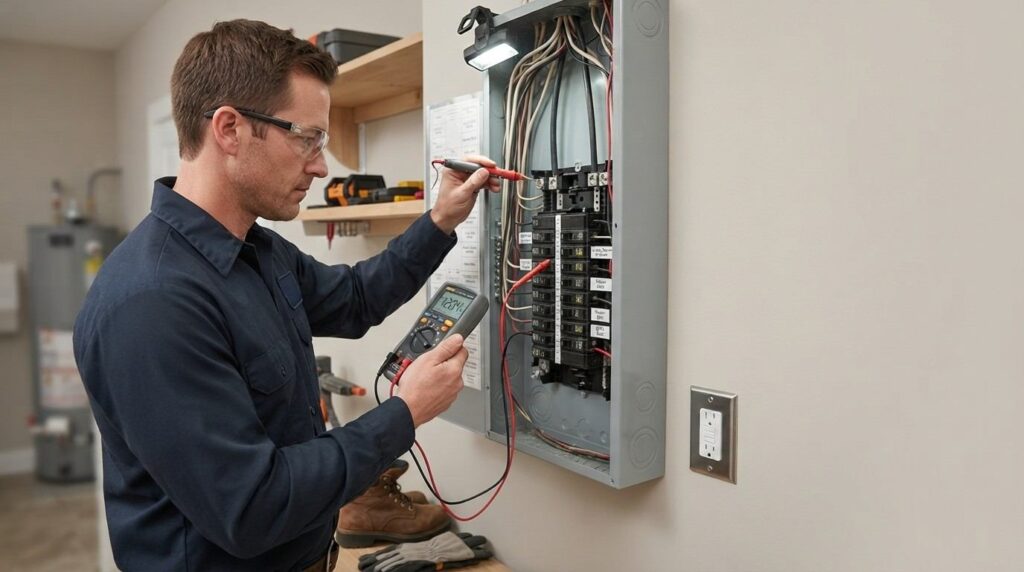
Ask what tests they run. Common ones include voltage, grounding, and load checks. Testing finds hidden problems before they get hot.
Circuit Safety Checks
Ask about GFCI and AFCI protection. GFCI guards spots near water, like kitchens, baths, garages, and outdoor outlets. AFCI helps prevent fires from arc faults.
Also ask about tight connections, proper grounding, and clear breaker labels. Those small details matter alot.
Final Inspection
The city inspector signs off on permitted work. Your electrician should also walk you through it. They show you the panel, the labels, and how to reset a breaker.
Ask for copies of the permit and inspection papers. Keep them in a folder. They help when you sell or file an insurance claim.
Evaluate Communication and Professionalism
Skills matter. So does how someone treats you. You’ll learn a lot in the first phone call.
Response Time
Did they call back the same day? Did they answer your questions? Fast replies early usually mean fast help later. Slow replies before you’ve paid? Expect worse after.
Clear Explanations
A good electrician talks like a person, not a manual. They explain the problem, the fix, and the cost. If you feel dumb after the call, that’s a red flag.
Appointment Reliability
Ask for a clear arrival window. Ask if they call ahead. Life is busy, and your time counts. A pro who texts “running 15 late” is worth keeping.
Ready to Hire?
Here’s a quick checklist to take with you:
- Active license you checked yourself
- Proof of insurance
- Three written quotes with fees listed
- Local experience with storms, salt, and older homes
- Real reviews and a written warranty
- Clear scope with change orders in writing
- Testing and inspection included
Flowtron Electric Inc. serves homes across Miami-Dade County. Questions about a project? Call (954) 945-1123. We’ll talk it through with no pressure.
FAQs
1. How do I know if an electrician in Fort Lauderdale is licensed?
Ask for the license number. Then search it on the Florida DBPR website. Check that it’s active and matches the company name.
2. How many quotes should I get for electrical work?
Get at least three. Compare the scope, not just the price. Look at permits, materials, fees, and warranty terms.
3. Do I need a permit for electrical work in Florida?
Many jobs do. Panel swaps, new circuits, and service upgrades usually need one. Rules vary by city, so ask your electrician and your local building department.
4. What should a written electrical quote include?
It should list materials, labor, fees, and the repairs planned. It should also explain how extra work gets approved. Get it in writing before work starts.
5. How can I tell if my home has outdated wiring?
Watch for two-prong outlets, old fuse boxes, and frequent tripped breakers. Flickering lights and warm panels are warning signs too. A licensed electrician can inspect and explain your options.
