
Your lights flicker. You shrug it off. Then the breaker trips again and you start to wonder.
Is this normal? Or is something wrong behind your walls?
Here’s the truth. Electrical problems don’t fix themselves. They wait. And when they act up, they act up fast.
This guide walks you through the real warning signs. The ones that mean grab your phone, not the ones you can ignore till next week. We’ll cover home problems, Fort Lauderdale specific issues, and true emergencies that need action right now.
Think of your home’s wiring like your body’s nervous system. Small signals matter. Ignore enough of them and you’ve got a real problem on your hands.
Let’s get into it.
Warning Signs You Need an Electrician
Your house talks to you. Most people just don’t know how to listen.
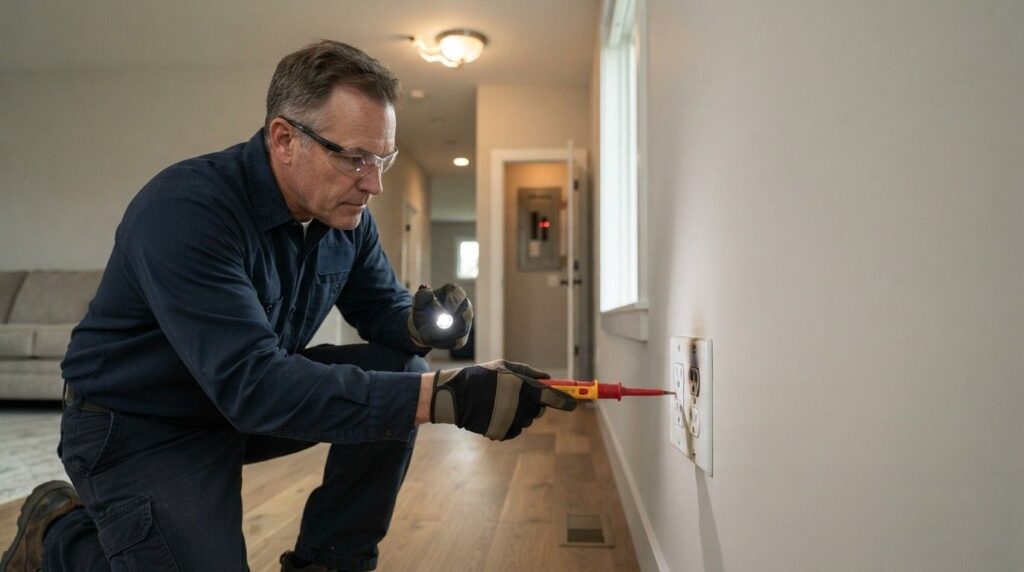
Hot or discolored switches/outlets
Touch a switch and it feels warm? That’s not normal. A working outlet should feel like nothing at all.
Discoloration is worse. Brown or black marks around an outlet mean heat damage already happened. This is a fire risk sitting in your wall.
Don’t wait on this one. Call an electrician before you flip that switch again.
Frequent breaker tripping or buzzing panels
One trip during a storm? Fine. That’s your panel doing its job.
But if breakers trip weekly, something’s overloaded or failing. A buzzing panel adds another red flag. Panels should hum quietly, not buzz like a beehive.
Ask yourself this. Would you keep driving a car that stalls every day? Your panel deserves the same attention.
Flickering or dimming lights
Lights that flicker when you run the microwave point to a loose connection or overloaded circuit. It’s annoying now. It gets dangerous later.
- One flickering bulb? Probably the bulb.
- Multiple lights flickering together? That’s wiring.
- Lights dimming when appliances kick on? Circuit overload.
Burning odors or sparks
A burning smell near an outlet is your house screaming for help. Sparks when you plug something in are just as bad.
This isn’t a maybe. This is stop, unplug, and call.
Persistent reliance on extension cords
Extension cords are meant for temporary use. If yours have become permanent fixtures, your home doesn’t have enough outlets for how you actually live.
That’s not a cord problem. That’s a wiring problem.

Fort Lauderdale Specific Needs
Living near the water changes the rules. Fort Lauderdale homes face challenges you won’t find inland.
Waterfront & Dock Wiring
Salt air eats away at wiring faster than you’d think. Dock outlets, boat lifts, and marine electrical systems all need moisture-rated components built for coastal life.
Homeowners planning bigger upgrades often tackle wiring and exterior work at the same time. If you’re also updating hurricane protection, a company like Viewlux Windows and Doors pairs well with electrical upgrades, since both address storm readiness at once.
HVAC and EV Upgrades
Florida heat runs your AC hard, all year long. Older wiring wasn’t built for today’s HVAC loads or EV chargers.
Adding an EV charger without checking your panel first is like adding a second engine to a boat built for one. Something’s got to give.
Storm/Generator Prep
Hurricane season isn’t a maybe here. It’s a when.
A properly installed generator hookup keeps your fridge running and your family safe during outages. Pair that with storm-rated wiring and you’re covering both power and protection.
Some homeowners combine this with hurricane-rated windows and doors for full storm prep. It’s the old saying at work: an ounce of prevention beats a pound of cure.
Immediate Emergency Red Flags
These four signs mean stop reading and start dialing.
Electric shocks
Felt a shock from a switch or appliance? That’s your body telling you the circuit isn’t grounded right. Don’t touch it again until a pro checks it.
Water near electrical components
Water and electricity never mix. Flooding, leaks, or damp outlets near any electrical source are a serious shock and fire risk.
Exposed or Damaged Wiring
Chewed wires, frayed cords, or wiring you can actually see are hazards waiting to happen. Cover them, avoid them, and call right away.
Smoke or visible electrical fire
Smoke from an outlet or panel means fire is already starting. Cut power at the main breaker if it’s safe to reach. Then call for help immediately.
Common Household Electrical Problems
Not every issue is an emergency. But most are worth a call sooner than later.
Dead outlets or switches
An outlet that stops working out of nowhere usually points to a tripped GFCI, a loose wire, or a failed circuit somewhere in the chain.
Unusual Heat From Electrical Fixtures
Light fixtures, ceiling fans, or panels that feel hot to the touch are working harder than they should. That extra heat has to go somewhere, and it’s rarely a good place.
Loose or Malfunctioning Electrical Connections
Loose connections cause flickering, buzzing, and eventually total failure. They’re like a handshake that keeps slipping. Eventually, the connection just breaks.
Outdated Electrical Components
Homes built decades ago often still run on outdated panels and knob-and-tube wiring. These systems weren’t built for today’s appliances, phones, and smart home gear.
Electrical Problems That Should Not Be DIY
Some jobs are made for YouTube tutorials. Electrical work isn’t one of them.
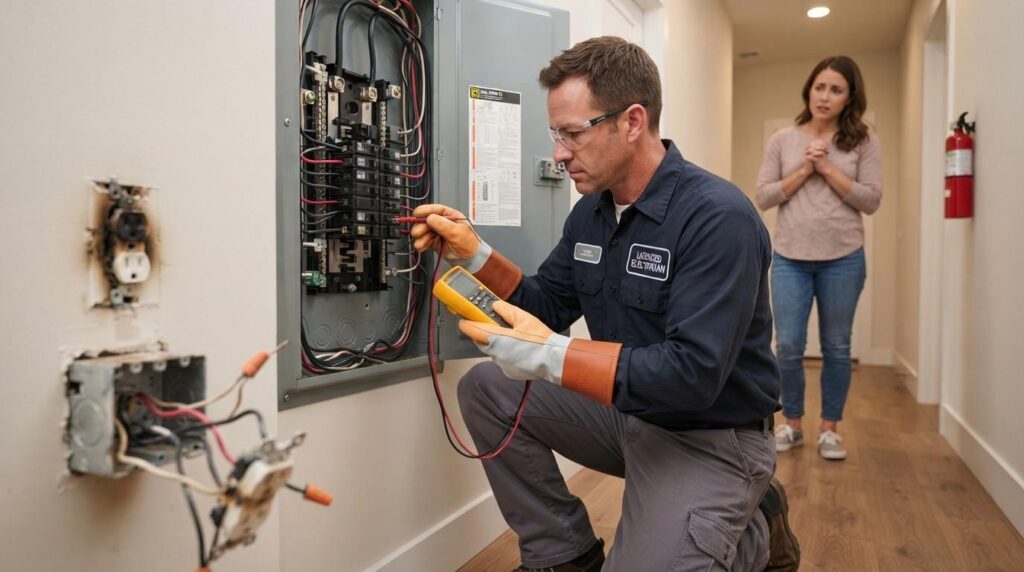
Electrical Panel Repairs
Your panel controls power to your entire home. One wrong move here risks shock, fire, or total system failure.
New Circuit Installation
Adding a circuit means tying into your home’s main power supply. It takes permits, code knowledge, and real experience to do it safely.
Major Electrical Alterations
Rewiring a room, upgrading service size, or moving your panel are big jobs. They touch every part of your home’s electrical safety.
How to Decide Between an Electrician Visit and an Emergency Response
Not sure if it’s urgent? Here’s a simple way to sort it out.
Problems That Can Wait for a Scheduled Inspection
- Outdated panels with no active issues
- Minor flickering in one room
- Planning an EV charger or generator install
Problems That Need Same-Day Attention
- Frequent breaker trips
- Warm outlets or switches
- Buzzing sounds from your panel
Situations That Require Immediate Action
- Sparks, smoke, or burning smells
- Electric shocks from any source
- Water touching electrical components
When in doubt, call. A quick phone call costs nothing. A house fire costs everything.
Call Flowtron Electric Today
Your home sends you signals. The question is whether you catch them before they become a real problem.
Flowtron Electric Inc. serves homeowners across South Florida with fast, honest electrical service. From routine inspections to true emergencies, we show up ready to fix it right the first time.
Don’t wait for a spark to turn into something worse. Call Flowtron Electric at (954) 945-1123 today.
Frequently Asked Questions
1. How do I know if a flickering light is serious? One bulb flickering is usually just the bulb. Multiple lights flickering at once, especially when appliances turn on, points to a wiring or circuit issue. That’s worth a call.
2. Is it normal for my breaker to trip during a storm? An occasional trip during heavy weather can be normal. Frequent trips, even on calm days, usually mean an overloaded or failing circuit.
3. Can I install an EV charger myself? No. EV chargers pull a lot of power and often require panel upgrades. A licensed electrician needs to confirm your system can handle the load safely.
4. What should I do if I smell burning near an outlet? Unplug anything nearby if it’s safe, avoid touching the outlet, and call an electrician right away. A burning smell often means damage is already happening.
5. Do older Fort Lauderdale homes need electrical upgrades? Many do. Homes with outdated panels or old wiring weren’t built for modern appliances, AC systems, or EV chargers. An inspection can confirm what your home needs
