

Short answer: yes. And it happens faster than most folks think.
If you live near the coast, that salty breeze rolling off the Atlantic isn’t just messing with your car’s paint job. It’s sneaking into your outlets, your breaker panel, and every bit of exposed wire in your garage or AC unit. Fort Lauderdale homes take a beating from this stuff year-round, and a lot of homeowners don’t notice until something trips, sparks, or just plain stops working.
Here’s the thing nobody tells you: salt air doesn’t need a storm to do damage. It works slow, quiet, and constant. Like rust eating a bike chain left out in the rain. One day it’s fine, the next day it’s stuck solid.
We’re Flowtron Electric Inc., based out of Miami-Dade County, and we see this exact problem on service calls all over South Florida. Let’s break down what’s really going on, what to watch for, and what you should do about it.
Immediate Dangers
Salt air damage isn’t always a slow burn. Sometimes it causes trouble right away, and that trouble can hurt you or your home fast.
Short Circuits
Salt particles are tiny, but they conduct electricity. When they settle on exposed wiring or connections, they create a path current was never meant to take. That’s a short circuit waiting to happen.
Ever wonder why your breaker trips for no clear reason? Salt buildup could be the quiet culprit behind it.
Electric Shock and Electrocution
Corroded wiring loses its protective coating over time. Once that insulation cracks, the metal underneath gets exposed. Touch it, or touch something connected to it, and you’re at risk.
This isn’t rare paranoia. It’s a real hazard in older coastal homes with aging wire runs.
Electrical Fires
Heat plus corrosion plus moisture is a bad combo. When connections corrode, resistance goes up. Higher resistance means more heat. More heat near flammable material means fire risk climbs fast.
According to the National Fire Protection Association, home electrical fires cause thousands of injuries and hundreds of millions in damage every year. Coastal corrosion just adds fuel to that fire, literally.
Most homeowners never see the spark coming. By the time smoke shows up, the damage already started weeks earlier inside the wall. That’s why catching it early matters so much.
Long-Term Effects
Not every sign shows up overnight. Some damage builds for months or years before it finally breaks something important.
Corrosion and Rust
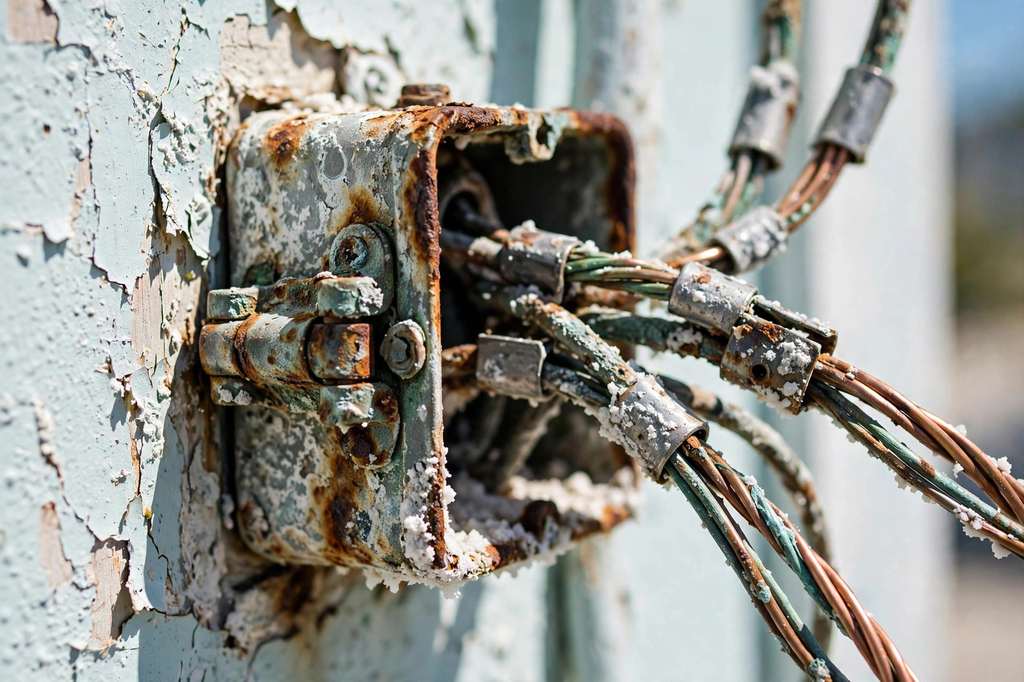
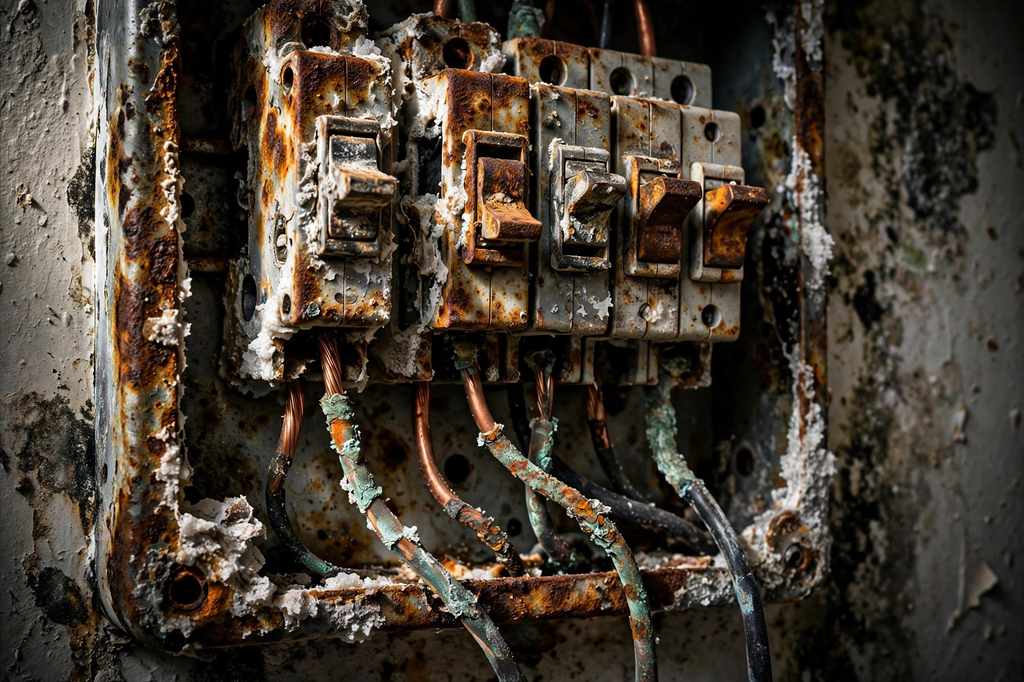
Salt speeds up oxidation. Copper turns green. Steel turns orange and flaky. Your wiring connections, panel screws, and grounding components all take the hit.
Rust doesn’t stay put either. It spreads, like a weed in a garden you forgot to weed.
Insulation Breakdown
Wire insulation is supposed to protect you for decades. Salt air cuts that lifespan way down. The coating gets brittle, cracks, and flakes off. Once that happens, you’re basically running bare wire.
Mold and Rot
Where there’s salt, there’s usually moisture too. That moisture gets into junction boxes and wall cavities. Mold loves that environment. So does wood rot, if your wiring runs near framing or trim.
This isn’t just an electrical problem anymore. It becomes a structural and health problem too.
Think about it. Would you rather fix one wire now, or tear out a moldy wall later? That’s the choice salt air quietly sets up for you.
What You Should Do
If you suspect salt air has gotten into your wiring, don’t wait around for a spark to confirm it. Act fast and act smart.
Turn Off the Power
Head to your breaker panel and shut off power to the affected area. This is your first move, every single time. No exceptions.
Never Touch Wet Wires
Water and electricity are a terrible pair. If wiring looks wet, corroded, or exposed, keep your hands off it completely. Call a pro instead.
Call a Professional
This isn’t a YouTube tutorial situation. Salt-damaged wiring needs a licensed electrician who knows coastal systems. Flowtron Electric Inc. handles exactly this kind of repair across Miami-Dade County and the greater Fort Lauderdale area. Call us at (954) 945-1123 and we’ll send someone out to check it properly.
Fixing it right the first time saves you a second call later. We’d rather spend an hour inspecting than have you spend a week worrying.
How Salt Air Causes Damage
So what’s actually happening on a chemical level? It’s worth understanding, because it explains why coastal wiring fails so much faster than inland wiring.
Moisture Magnetism
Salt is hygroscopic. That’s a fancy word for “it pulls moisture out of the air like a sponge.” Once humidity hits around 75%, salt crystals start absorbing water and forming a thin, corrosive film on metal surfaces.
Florida humidity sits above that mark most of the year. That’s basically a free invitation for corrosion.
Electrochemical Corrosion
When salt water touches two different metals, like copper wire and a steel screw, it creates a tiny electrochemical reaction. This speeds up metal breakdown far quicker than plain rust from rain alone.
Think of it like a slow-motion battery eating away at your electrical system.
High Resistance and Heat
Corroded connections don’t conduct electricity as well as clean ones. That resistance turns into heat. Heat weakens insulation further. It’s a cycle that feeds itself until something fails.
This chain reaction is sneaky. It doesn’t announce itself with a warning light. It just builds, quietly, until the day it doesn’t.
Common Risks and Failures
Salt air damage shows up in predictable places. Here’s what tends to go wrong first.
Circuit Breakers Tripping
Breakers are designed to trip when something’s off. Salt corrosion inside the panel can cause nuisance trips, or worse, a breaker that doesn’t trip when it actually should.
HVAC Failure
Your AC unit sits outside, exposed to the elements all day. The electrical connections inside condenser units corrode fast near the coast. This is one of the most common failure points we see on service calls.
Fire Hazards
We already covered this above, but it bears repeating. Corroded connections generate heat. Heat plus flammable material equals risk. It’s not a maybe, it’s a matter of time.
Here’s a question worth sitting with: when was the last time anyone actually checked your panel? If you can’t remember, that’s your answer.
Protection and Prevention
The good news? Salt air damage is preventable, or at least slowable, with the right setup.
Here’s what actually works:
- Marine-grade electrical components built to resist corrosion
- Dielectric grease applied to connections and terminals
- Routine inspections to catch problems early
Marine-Grade Equipment
Standard residential electrical parts aren’t built for salty coastal air. Marine-grade equipment uses corrosion-resistant metals and sealed housings designed for exactly this environment.
Dielectric Grease
This stuff coats metal connections and blocks moisture from reaching them. It’s a small step that makes a big difference over time, kind of like sunscreen for your wiring.
Routine Inspections
An annual electrical inspection catches corrosion before it becomes a short circuit or a fire. As the old saying goes, an ounce of prevention beats a pound of cure. That’s exactly what applies here.
Flowtron Electric offers inspection visits built specifically for coastal homes. We check panels, outlets, and outdoor units for early corrosion signs before they turn into bigger repairs.
Signs Your Home May Have Salt Air Electrical Damage
Not sure if your home’s already affected? Here are the red flags.
Flickering or Dimming Lights
Lights that flicker for no reason often point to a loose or corroded connection somewhere in the circuit.
Discolored or Corroded Outlets and Switches
Green, white, or rust-colored buildup around outlets and switch plates is a visual sign that corrosion has already started.
Unusual Buzzing or Burning Smells
A buzzing sound or faint burning smell near an outlet or panel is never normal. That’s your system telling you something’s wrong right now.
Don’t brush it off as “just an old house smell.” Trust your nose. It’s usually right.
Why Fort Lauderdale Homes Are at Higher Risk
Not every home faces the same level of exposure. Location and climate make a real difference here.
Proximity to the Atlantic Coastline
The closer your home sits to the water, the more salt particles land on your exterior wiring, AC units, and panels. Fort Lauderdale’s coastal position puts a huge number of homes directly in that zone.
Year-Round Humidity and Salt Spray
Unlike colder states with a short humid season, South Florida stays warm and humid almost all year. That means corrosion never really gets a break.
Hurricane Season and Storm Surge Exposure
Storms push salt spray further inland and often flood electrical systems directly. Hurricane season adds a whole extra layer of risk on top of everyday salt exposure.
If your home sits within a few miles of the water, assume salt exposure is part of your reality now. Planning around it beats reacting to it later.
Cost of Salt Air Electrical Damage
Nobody likes talking numbers, but you need to know what you’re dealing with before a bigger bill shows up.
Typical Repair and Rewiring Costs
Costs vary a lot depending on how much wiring is affected and how old your home’s system is. A licensed electrician can give you an accurate quote after inspecting the actual damage, since every property’s different.
Insurance Coverage for Corrosion Damage
Here’s the catch: many homeowner policies treat gradual corrosion as a maintenance issue, not a covered loss. Check your policy details and talk to your agent before assuming you’re covered.
Cost of Delaying Repairs
Waiting almost always costs more. Small corrosion problems turn into full rewiring jobs if left alone. Fixing it early is cheaper than fixing it after a failure or a fire.
It’s kind of like ignoring a small leak under the sink. Easy fix today, flooded cabinet next month.
Repair vs. Rewiring: How to Decide
Sometimes a repair is enough. Sometimes the whole system needs replacing. Here’s how to think about it.
Age and Condition of Existing Wiring
Older homes, especially those built before modern corrosion-resistant standards, often need full rewiring rather than a patch job.
Frequency of Recurring Corrosion Issues
If you keep calling someone out for the same corrosion problem every year, that’s a sign the fix needs to go deeper than a quick patch.
Licensed Electrician Requirements in Florida
Florida law requires licensed electrical contractors for this kind of work, and for good reason. It protects you, your home, and your insurance claim down the road. Flowtron Electric Inc. is built around exactly this kind of coastal repair work in Miami-Dade County.
We’ll walk through your options honestly. Sometimes a repair handles it. Sometimes rewiring is the smarter long-term call. Either way, you’ll know exactly why before any work starts.
The Bottom Line
Salt air isn’t going anywhere. It’s just part of life near the Atlantic, like humidity and hurricane season. But that doesn’t mean your wiring has to lose the fight.
Catching the small signs early, flickering lights, a faint buzz, a discolored outlet, saves you money and keeps your family safe. Waiting it out only lets the problem grow roots.
Flowtron Electric has spent years helping Miami-Dade and Fort Lauderdale homeowners stay ahead of salt air damage. We know this climate inside and out, because we work in it every day.
If something feels off with your wiring, don’t gamble on it. Give Flowtron Electric a call at (954) 945-1123 and let’s get it sorted before it turns into a bigger headache.
Frequently Asked Questions
How long does it take for salt air to damage wiring? It depends on exposure, humidity, and how close your home sits to the coast. Some systems show corrosion within a few years, while sealed or inland systems take much longer.
Can homeowners inspect their own wiring for salt damage? You can look for visible signs like discoloration or corrosion on outlets and panels. But checking inside walls or panels safely requires a licensed electrician.
What’s the first sign of salt air damage in electrical systems? Flickering lights, buzzing sounds, or discolored outlets are usually the earliest visible clues something’s off.
Does homeowners insurance cover salt air corrosion damage? Not always. Many policies classify it as gradual wear and maintenance, not a sudden covered loss. Always confirm directly with your insurer.
Who do I call for salt air electrical damage in Fort Lauderdale? Call Flowtron Electric Inc. at (954) 945-1123. We serve Miami-Dade County and the surrounding coastal areas with inspections and repairs built for salt air conditions.
