

Florida living means sunshine, palm trees, and salty air. It also means your home’s wiring takes a beating every single day.
Here’s the thing nobody tells new homeowners. That thick, sticky humidity doesn’t just mess with your hair. It quietly eats away at your electrical system too.
At Flowtron Electric Inc., we’ve opened up enough panels in Fort Lauderdale to know the pattern by heart. Rust here. A melted breaker there. A GFCI that trips for no reason at all.
This guide walks you through exactly how humidity damages home electrical systems, where the weak spots hide, and what you can do before a small problem turns into a costly one.
Why Fort Lauderdale’s Climate Puts Extra Stress on Home Electrical Systems
South Florida isn’t like most of the country. The air stays warm and wet almost all year long.
That combo is rough on metal, plastic, and anything with a circuit. Think of your electrical panel like a car left outside in a car wash that never stops running.
South Florida’s Year-Round Humidity and Heat Index
Fort Lauderdale averages humidity levels above 70% for most months. Add in heat index numbers that regularly climb past 95 degrees, and you get a slow cooker effect inside walls and attics.
Electrical components aren’t built to sit in a sauna forever. Moisture finds its way into panels, outlets, and junction boxes no matter how well a home gets sealed.
Over time, that moisture turns into condensation. Condensation sits on metal parts. And metal parts don’t like water one bit.
Salt Air and Coastal Proximity in Fort Lauderdale & Miami
Living near the coast adds another layer of trouble. Salt particles travel on ocean breezes and land on everything, including your outdoor panel and pool equipment.
Salt speeds up corrosion big time. It’s like throwing salt on an icy sidewalk, except here it’s eating through copper and aluminum instead of ice.
Homes within a few miles of the water in Fort Lauderdale or Miami often show faster wear on electrical parts. Flowtron Electric Inc. sees this constantly across Miami-Dade County service calls.
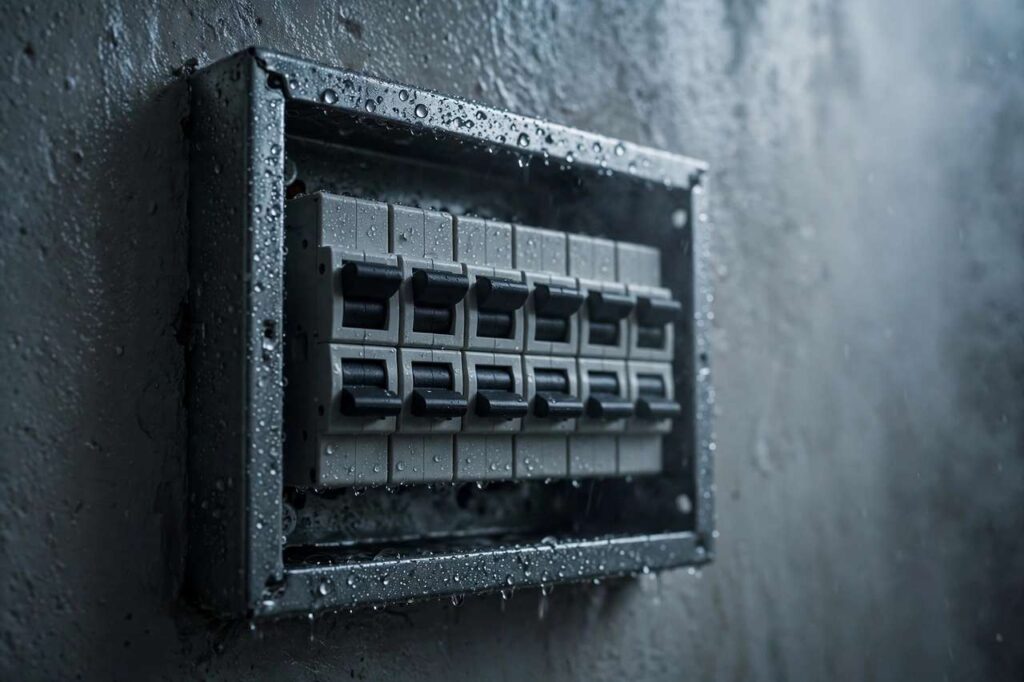
Main Effects of Humidity on Electrical Systems
Humidity doesn’t attack your wiring all at once. It works slow and steady, like a drip that eventually floods the basement.
Here are the main ways it causes damage over time.
Corrosion and Oxidation
Moisture plus metal equals rust. It’s basic chemistry, and your electrical panel is not exempt from it.
Electrical Panels & Bus Bars
Your panel’s bus bars carry a serious amount of current. When humidity creeps in, those bars start to oxidize.
Oxidation creates a layer of buildup that blocks proper contact. That buildup raises resistance and generates heat where it shouldn’t exist.
A corroded bus bar isn’t just ugly. It’s a fire risk sitting quietly behind your panel door.
Wiring Connections
Wire connections inside junction boxes and outlets face the same threat. Copper turns green or dark when moisture and air mix over time.
Loose, corroded connections cause flickering lights and weak power delivery. Left alone, they can arc and spark without warning.
Overheating and Poor Contact
Corrosion and moisture both lead to one dangerous result. Poor contact points generate heat, and heat is never your friend inside a wall.
Thermal Cycling and Switch Degradation
Florida heat during the day and cooler nights create constant expansion and contraction. Engineers call this thermal cycling, and it’s brutal on switches and connectors.
Picture a rubber band stretched and released thousands of times a year. Eventually it loses its snap. Switches and breakers wear out the same way.
This cycle weakens contact points gradually. You won’t notice it until a switch feels warm or a breaker trips way too often.
Nuisance Tripping
Ever flip a breaker back on just to have it trip again an hour later? That’s often humidity talking, not a random glitch.
GFCI Failures
GFCI outlets are built to sense ground faults and shut off fast. Moisture inside the outlet can trick the sensor into tripping even when nothing’s wrong.
In humid garages, bathrooms, and outdoor outlets, this happens more than homeowners realize. A GFCI that trips constantly is often a moisture problem, not a defective outlet.
Arcing
Arcing happens when electricity jumps across a gap it shouldn’t cross. Corrosion and loose connections both create those gaps.
Why does this matter so much? Because arc faults are one of the leading causes of electrical house fires in the country.
Appliance and Device Wear
Your appliances take hits too. Humidity shortens the life of motors, circuit boards, and sensitive electronics inside washers, dryers, and HVAC units.
Is it any wonder South Florida homeowners replace appliances sooner than folks up north? The moisture in the air plays a direct role in that.
Storm and Surge Vulnerability
Hurricane season brings more than wind and rain. It brings power surges, lightning strikes, and sudden outages that stress already-weakened wiring.
A panel already corroded from months of humidity has less room to absorb a surge safely. When it rains, it pours, and that old saying fits Florida electrical problems perfectly.
Home Areas Most Vulnerable to Humidity Damage
Some spots in your house take way more abuse than others. These are the areas Flowtron Electric Inc. techs check first on every service call.
Outdoor Outlets and Pool Electrical Equipment
Pool pumps, outdoor lighting, and exterior outlets sit directly in the humidity and salt air path. Even weatherproof covers can’t stop moisture forever.
Pool electrical equipment needs proper bonding and grounding to stay safe. A failing GFCI near a pool isn’t just annoying. It’s a genuine safety concern for anyone swimming.
Check outdoor outlet covers for cracks or gaps every few months. Small openings let in way more moisture than people expect.
Garage, Attic, and Crawl Space Wiring
Garages and attics trap heat and humidity worse than living spaces. Poor airflow turns these spots into slow cookers for your wiring.
Crawl spaces add standing moisture to the mix. Wiring that runs through these zones corrodes faster than wiring tucked inside climate-controlled walls.
HVAC Electrical Components
Your AC system runs nonstop for months in Florida. That means its electrical components face constant exposure to condensation and temperature swings.
Capacitors, contactors, and control boards wear out faster in this environment. A struggling AC unit is sometimes an electrical issue hiding behind a cooling complaint.
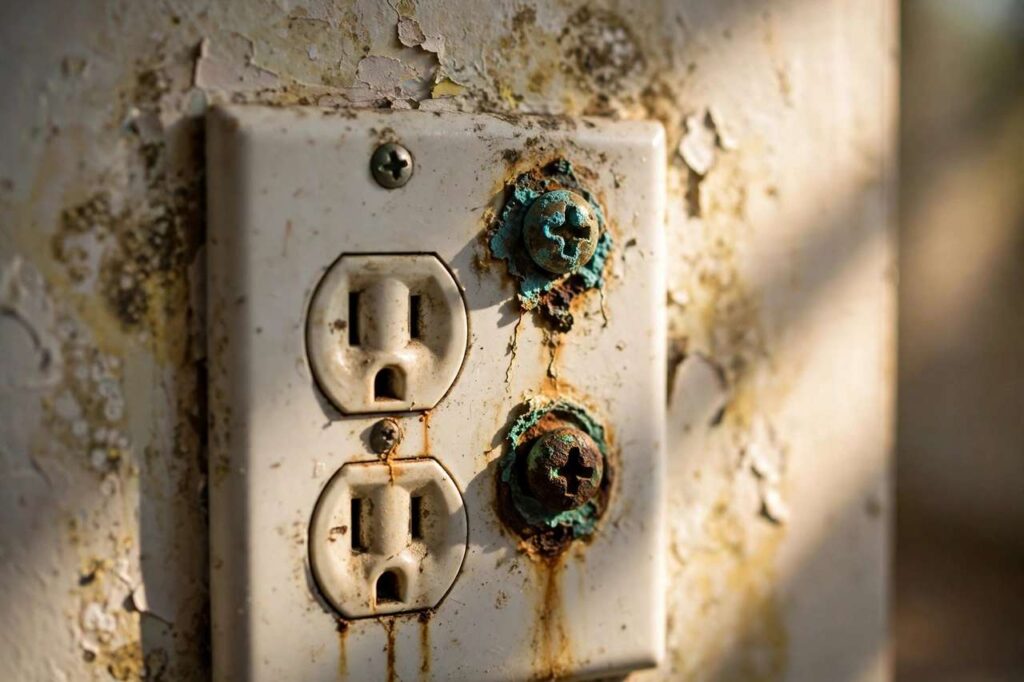
Warning Signs of Humidity-Related Electrical Damage
Your house usually tries to warn you before things get bad. The trick is knowing what to look and smell for.
Musty Odor Near Outlets or Panel
A musty or burnt smell near your panel or outlets is never normal. That smell often means moisture has mixed with dust and heat inside the box.
Trust your nose here. If something smells off, it probably is.
Visible Rust or Discoloration on Panel/Outlets
Open your panel cover occasionally and take a look. Rust spots, greenish copper, or dark staining are all red flags worth addressing.
Discolored outlet faces or switch plates point to heat buildup underneath. Don’t ignore cosmetic changes on electrical fixtures. They’re rarely just cosmetic.
Warm or Discolored Outlet and Switch Plates
Touch a switch plate and feel warmth that shouldn’t be there. That warmth usually means a loose or corroded connection behind the wall.
Discoloration paired with warmth is a stronger signal. It means the issue has been building for a while already.
Prevention and Maintenance Tips
Good news first. Most humidity damage is preventable with a bit of regular upkeep.
Annual Panel Inspections:
Get your panel checked once a year by a licensed electrician. A trained eye catches corrosion long before it becomes a fire hazard.
Flowtron Electric Inc. recommends scheduling this ahead of hurricane season every year. Prevention beats repair every single time.
Upgrade Safety Outlets
Older outlets without proper moisture protection age faster in Florida’s climate. Upgrading to weather-resistant and tamper-resistant outlets adds a real layer of defense.
This is especially true for kitchens, bathrooms, garages, and anything outdoors.
Install Surge Protection
Whole-home surge protectors absorb sudden spikes before they reach your appliances and panel. Think of it as a seatbelt for your entire electrical system.
It won’t stop every storm, but it softens the blow considerably.
Control Indoor Humidity
Dehumidifiers and well-maintained AC systems keep indoor air drier. Drier air means less condensation forming inside walls, attics, and panels.
Keep indoor humidity between 30 and 50 percent for the healthiest balance between comfort and protection.
When to Call a Licensed Fort Lauderdale Electrician
Some issues are fine to watch. Others need a professional on site fast.
Signs You Need an Immediate Inspection
Call a licensed electrician right away if you notice any of these:
- Burning smell near outlets, switches, or the panel
- Breakers tripping repeatedly within the same day
- Warm outlet covers or visible scorch marks
- Flickering lights that happen often, not just once
- Buzzing sounds coming from the panel or outlets
DIY Limits vs. Professional Repairs
Replacing a light bulb is fine. Opening your panel to inspect bus bars is not.
Electrical work in a humid coastal environment requires specific knowledge of corrosion patterns and code requirements. Flowtron Electric Inc. technicians handle the diagnosis and repair safely, with the right tools for the job.
Why risk a DIY shortcut on something that can burn your house down? It’s just not worth the gamble.
Cost of Ignoring Humidity-Related Electrical Damage
Putting off a small repair almost always costs more later. That’s true with your car, your roof, and definitely your electrical system.
Typical Repair and Replacement Costs
A simple outlet replacement costs far less than a full panel swap. Corrosion caught early might mean cleaning and tightening connections for a modest fee.
Wait too long, and you could face panel replacement, rewiring sections of the home, or appliance damage from power issues. Those costs stack up fast.
Homeowners Insurance Considerations
Insurance companies pay close attention to electrical fire causes. A claim tied to neglected maintenance can get denied or reduced.
Keeping records of inspections and repairs through a licensed company protects you both physically and financially. It’s paperwork that actually pays off.
The Bottom Line
Florida humidity isn’t going anywhere, and neither is the wear it causes. The good news is a little attention goes a long way toward keeping your home safe.
Flowtron Electric Inc. has serviced homes throughout Miami-Dade County and Fort Lauderdale for years, and we’ve seen firsthand how fast coastal moisture can turn a minor issue into a major one. Regular checkups catch problems while they’re still cheap and simple to fix.
Don’t wait for a burning smell to tell you something’s wrong. Call Flowtron Electric Inc. at (954) 945-1123 to schedule an inspection today.
FAQs
1. How often should I get my electrical panel inspected in Fort Lauderdale? Once a year is the general rule for most homes. Coastal properties close to salt air may benefit from inspections every six to eight months instead.
2. Can humidity really cause an electrical fire? Yes, it can. Corrosion and loose connections from moisture buildup create heat and arcing, both common causes of electrical fires in humid climates.
3. Why does my GFCI outlet keep tripping for no reason? Moisture inside the outlet often triggers the sensor even without an actual fault. This is extremely common in Florida garages, bathrooms, and outdoor outlets.
4. Is it safe to fix panel corrosion myself? No, it isn’t safe to handle this alone. Panels carry high voltage, and corrosion removal requires proper tools and training to avoid shock or further damage.
5. How do I know if my home needs rewiring due to humidity damage? Signs include frequent tripping, warm outlets, musty smells, and visible rust. A licensed electrician like Flowtron Electric Inc. can confirm the full extent during an inspection.
