
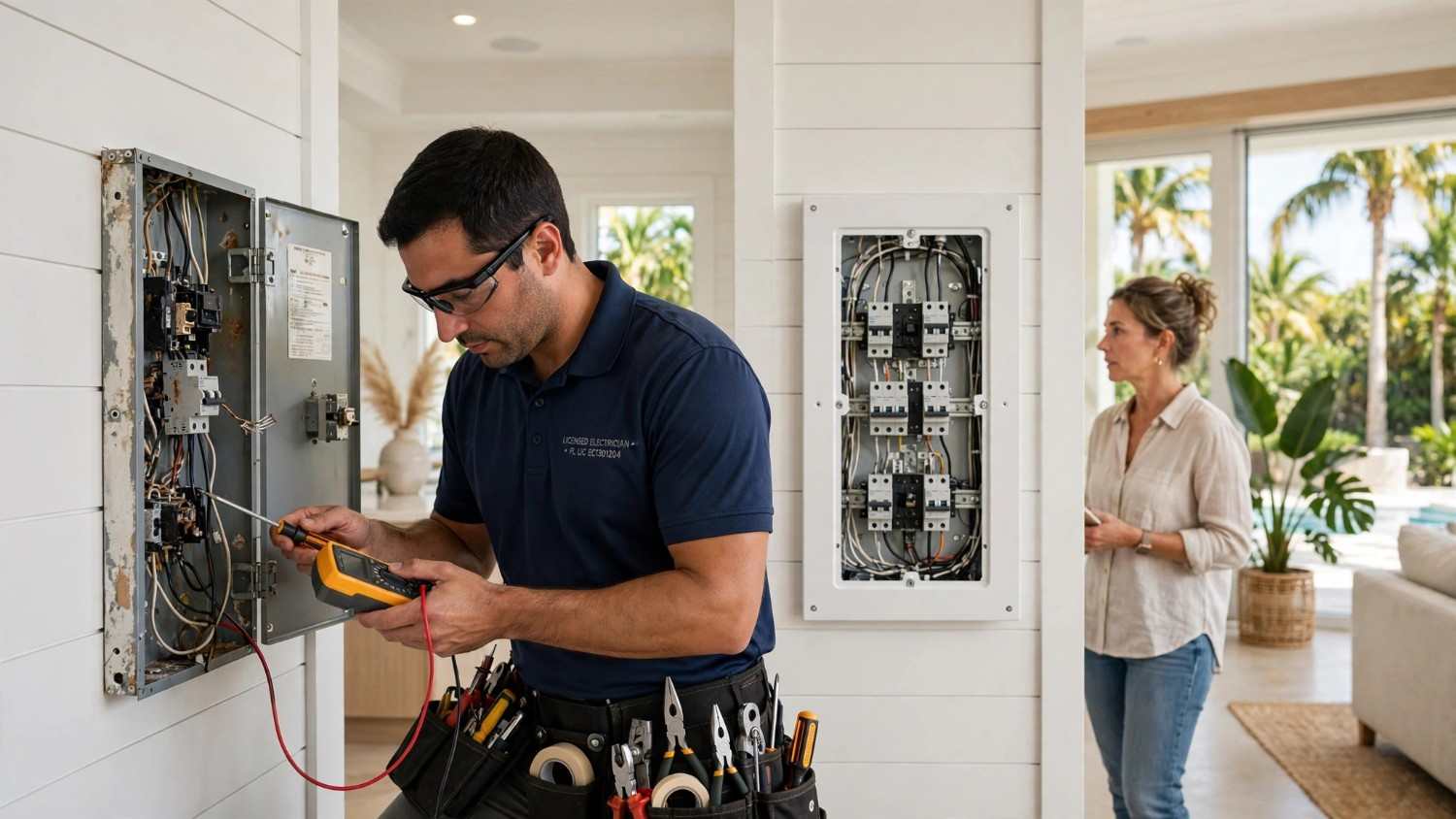
So your lights flicker. A breaker keeps tripping. Maybe an outlet feels warm.
Now you’re stuck on the big question. Do you fix it or replace it?
That call isn’t always simple. Sometimes a small fix is plenty. Other times a patch just kicks the problem down the road.
Down here we say it plain. Don’t wait for the storm to fix the roof. Same goes for your wiring.
Let’s walk through it together. No scare tactics. Just the honest stuff a good electrician would tell you at your kitchen table.
Repair vs. Replacement: What Each Option Involves
Repair means we fix the broken part. We leave the healthy stuff alone.
Think of it like patching a flat tire. The car’s fine. One thing went wrong.
Replacement is bigger. We swap out a whole system or a big chunk of it.
That might mean a new panel. Or fresh wiring through a wall. Or a full outlet circuit.
Repair is faster and cheaper up front. Replacement costs more but buys you years of peace.
Neither one is “good” or “bad.” It depends on what’s actually wrong under the surface.
Here’s the thing folks miss. Your home’s electrical system is one big team.
The panel, the wires, the outlets. They all work together. When one part fails, we ask a simple question. Is this a lone problem? Or a team problem?
A lone problem gets a repair. A team problem often needs replacement. That’s the heart of every decision we make.
When Electrical Repair Is Usually Enough
Plenty of problems are small. They don’t need a teardown.
Here’s when a simple repair usually does the trick:
- One dead outlet while the rest work fine
- A single tripped breaker that resets and behaves
- A loose wire at one connection
- A worn light switch that feels sloppy
- A flickering fixture tied to one bad part
See the pattern? The issue stays in one spot.
Your system is healthy. One piece just wore out or came loose. We tighten, swap, or reconnect, and you’re back in business.
Repairs like these are quick wins. Most take an hour or two.
You save money. You keep your day moving. And the fix holds because the rest of your system is solid.
The key is honesty. A real electrician won’t push a big job when a small one works. If someone jumps straight to “replace everything,” ask why. A good answer builds trust. A vague one should worry you.
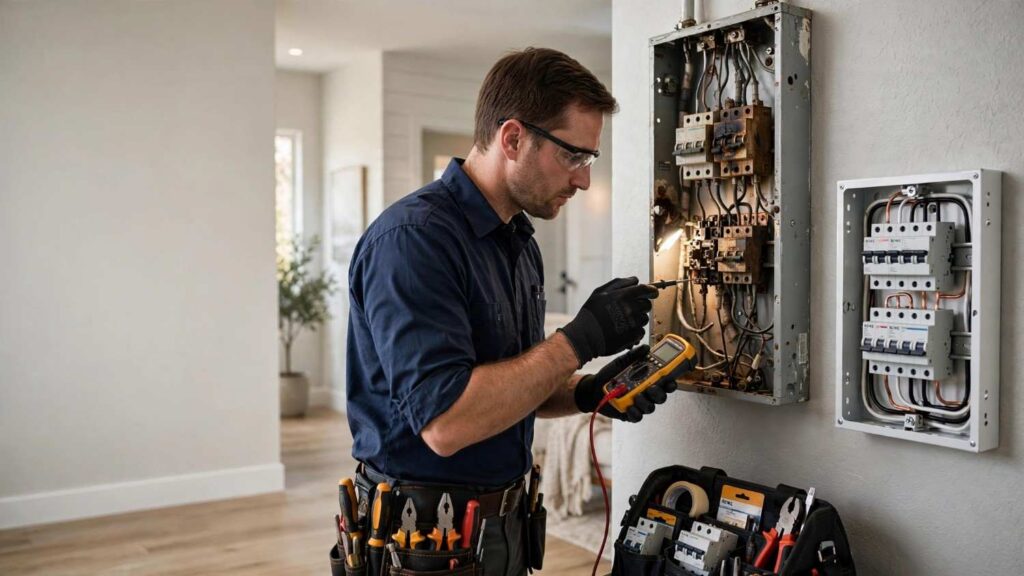
When Electrical Replacement Becomes Necessary
Some problems keep coming back. That’s your clue.
When the same breaker trips week after week, the wiring may be the real story.
Replacement makes sense when:
- The panel is too small for your home’s needs
- Wiring is old, brittle, or damaged in many places
- You smell burning or see scorch marks
- The system can’t handle your AC, fridge, and chargers at once
- Repairs keep stacking up and never really stick
Ever pour water into a leaky bucket? That’s endless repairs on a dying system. At some point you buy a new bucket.
There’s real relief on the other side. Imagine a home where breakers just work.
No midnight trips to the garage. No worry when you run the AC and the oven. That calm is what a full replacement can give you.
It’s not about spending more. It’s about spending once and being done.
Repairable Damage vs. Replacement-Level Damage
Not all damage weighs the same. Here’s a quick side-by-side.
| Usually Repairable | Often Needs Replacement |
| One faulty outlet | Whole panel overloaded |
| Single loose wire | Brittle wiring in many rooms |
| Worn switch | Burnt or melted parts |
| One tripped breaker | Repeated tripping across circuits |
| Minor fixture fault | Water-damaged wiring |
The rule of thumb is easy. One spot, one fix. Many spots, bigger plan.
If damage shows up in a bunch of places, patching each one gets pricey. And it never solves the root.
How an Electrician Determines Repair or Replacement
A good electrician doesn’t guess. We look, test, and measure.
Here’s roughly what we check on a visit:
- The panel. Its size, age, and heat
- The wiring. Its type, condition, and safety
- The load. What your home actually pulls
- The history. How often stuff breaks
Then we weigh it all. Is this one bad part? Or a sign of a tired system?
We tell you straight. Fix it, or replace it, and why. You should never feel talked into anything.
We also show our work. We’ll point at the panel and explain what we see.
Too much heat here. A loose lug there. Wiring that’s seen better days. When you understand the problem, the choice feels obvious.
That’s how it should go. You’re the boss of your home. We’re just the guides with the flashlight and the meter.
Electrical System Age and Condition
Age matters more than folks think. Wiring doesn’t last forever.
Many older Fort Lauderdale homes still run decades-old panels. Some were built for a very different lifestyle.
Back then, no one charged three phones. No one ran a big AC all summer.
Watch for these age signs:
- A panel over 25 to 30 years old
- Old fuse boxes instead of breakers
- Cloth or aluminum wiring
- Outlets with only two prongs
Old bones can still be safe. But they need a real check. Condition beats age every time.
Safety Risks That Change the Repair-or-Replace Decision
Some problems aren’t about money. They’re about safety, plain and simple.
Would you drive on bald tires to save a few bucks? Same logic here.
These signs push us toward replacement fast:
- Burning smells near outlets or the panel
- Warm or hot wall plates
- Sparks when you plug things in
- Buzzing sounds from the panel
- Shocks when you touch a switch
If you notice any of these, stop. Call a pro. Your family’s safety wins over any repair bill.
Peace of mind isn’t a luxury. It’s the whole point.
Electrical Code Compliance and Replacement Decisions
Codes exist to keep people safe. They change over the years too.
An old setup might have been fine in its day. Today it may fall short.
When we replace parts, we bring them up to current code. That protects you and your home’s value.
Code often comes into play when:
- You add big new appliances
- You remodel a kitchen or bath
- You sell the house
- Old work was done wrong
Sometimes a repair can’t legally stand. The code says upgrade. That’s not us upselling. That’s the rulebook.
Permits and Inspections for Electrical Replacement
Bigger jobs usually need a permit. That’s normal and good.
A permit means the work gets inspected. An outside expert checks it’s safe.
Here’s why that helps you:
- It proves the work is done right
- It protects your home insurance
- It keeps your resale value strong
- It gives you a paper trail
Small repairs often skip this step. Panel swaps and rewires usually don’t.
We handle the permit side for you. No confusing forms. No guesswork on your end.
Some homeowners skip permits to save time. That’s a costly gamble.
Unpermitted work can haunt you at resale. A buyer’s inspector may flag it. Then you’re redoing the job anyway, plus fines.
Do it right the first time. It’s cheaper than doing it twice.
Cost Factors: Repair vs. Replacement
Let’s talk money, because that’s the real worry.
Repairs cost less today. That’s the easy part to see.
Repair price depends on:
- The part that failed
- How hard it is to reach
- Time on the job
Replacement price depends on:
- System size
- Wiring length
- Permits and inspections
- Code upgrades
Yes, replacement stings more up front. But cheap now can cost more later. Keep reading.
One more thing on cost. Beware the “too good to be true” quote.
A price way below the rest often hides something. Maybe no permit. Maybe cheap parts. Maybe corners cut behind the wall.
Good electrical work has a fair price. Not the highest. Not the lowest. Fair, clear, and in writing.
When a Lower Repair Cost May Not Be the Better Long-Term Option
Here’s the trap. The cheap fix feels smart today.
But add up five small repairs. Suddenly you spent more than a clean replacement.
Picture bailing water from a sinking boat. Cheaper than a new boat, sure. Until you’re bailing every night.
A repair may cost you more when:
- The same issue keeps returning
- The system is near the end anyway
- Repairs don’t fix the root cause
- Safety risks keep growing
A new system brings real relief. No more midnight breaker trips. No more worry. That value is hard to price.
Fort Lauderdale Factors That Can Affect Electrical Repairs
South Florida is its own beast. Our climate hits electrical systems hard.
Local factors that matter here:
- Humidity that speeds up corrosion
- Salt air near the coast
- Storms and power surges
- Heavy AC use all year long
Your cousin’s wiring in a dry state ages slower. Ours works overtime.
That’s why a Fort Lauderdale electrician should know local homes. We see how heat and salt wear things down. Local know-how isn’t a bonus. It’s the job.
Storm season adds another layer. A big surge can fry a panel in a blink.
That’s why surge protection matters so much here. It’s a small add-on with a big payoff. Think of it as a seatbelt for your electronics.
We’ve seen it save TVs, fridges, and whole home systems. In a place with this much lightning, that’s real peace of mind.
What Homeowners Should Ask Before Approving Electrical Work
You deserve clear answers. A good pro welcomes your questions.
Ask these before you say yes:
- Is this a repair or a full replacement?
- Why do you recommend that?
- Will this meet current code?
- Do we need a permit?
- What happens if we wait?
- Can you put the quote in writing?
Trust is earned, not assumed. If someone dodges these, that’s a red flag.
At Flowtron Electric, we’d rather over-explain than leave you guessing.
Electrical Repair vs. Replacement: A Practical Decision Guide
Let’s make this dead simple. Use this quick gut-check at home.
Lean toward repair when:
- The problem sits in one spot
- Your system is fairly new
- It’s a first-time issue
- There’s no safety risk
Lean toward replacement when:
- Problems show up everywhere
- Your system is old and tired
- The same thing keeps breaking
- You see or smell danger signs
Still unsure? That’s normal. This stuff hides behind walls. When in doubt, get real eyes on it.
When to Get a Professional Electrical Assessment
Some things you just shouldn’t DIY. Wiring is one of them.
Call for a professional assessment when:
- Breakers trip again and again
- Lights flicker across rooms
- You smell burning anywhere
- Your panel is 20-plus years old
- You’re planning a big remodel
A pro visit brings clarity. You’ll know what’s safe and what’s not.
Flowtron Electric Inc. serves Fort Lauderdale and Miami-Dade County. One honest look can save you money, stress, and worry.
Call us at (954) 945-1123. No pressure. Just straight answers from folks who do this every day.
Frequently Asked Questions
1. How do I know if I need electrical repair or full replacement?
Look at where the problem lives. One bad outlet or switch usually means a simple repair. But if issues pop up in many rooms, or your panel is old, replacement may be smarter. A quick pro assessment settles it fast.
2. Is it dangerous to keep repairing an old electrical panel?
It can be. Old panels sometimes can’t handle modern power loads. If yours trips a lot, buzzes, or feels warm, that’s a warning. At that point, repeated repairs may hide a bigger safety risk. Get it checked before it gets worse.
3. Do electrical replacements in Fort Lauderdale need a permit?
Usually, yes. Big jobs like panel swaps and rewires typically need a permit and an inspection. That protects your safety, your insurance, and your home value. Small repairs often don’t. Flowtron Electric handles the permit paperwork for you.
4. Why does electrical work cost more in South Florida homes?
Our climate is tough on wiring. Humidity, salt air, storms, and year-round AC all speed up wear. That means local systems age faster and sometimes need more work. A local electrician knows these patterns and plans for them.
5. How often should I have my home’s electrical system checked?
Every few years is a good habit. Check sooner if your home is older or you notice flickering, tripping, or burning smells. A big remodel is another good time. Regular checks catch small issues before they turn costly.
Need a straight answer on repair or replacement? Flowtron Electric Inc. proudly serves Fort Lauderdale and Miami-Dade County, Florida. Call (954) 945-1123 today
