
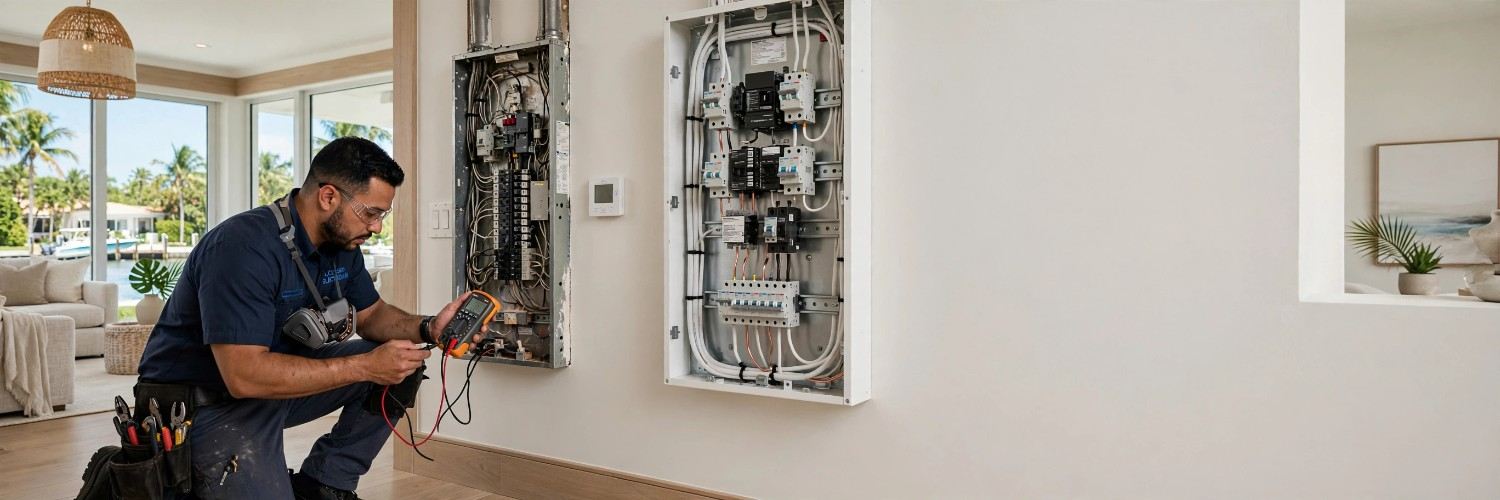
Your lights flicker. Your breaker trips again. And you just stand there wondering, is this a small fix or a big one?
Every Fort Lauderdale homeowner hits this fork in the road. Repair or replace? It feels like guessing in the dark. But it doesn’t have to.
Here’s the thing. Your home’s wiring is like the veins in your body. Small clogs get patched. Worn out ones need real work. The trick is knowing which is which.
Down here folks say, don’t wait for the storm to fix the shutters. Same goes for your electrical system. This guide breaks it all down in plain words. No jargon. No scare tactics.
By the end, you’ll know the signs, the costs, and the smart call. You’ll feel calm instead of confused. That’s the whole point.
Let’s walk through it together.
Electrical Repair vs. Replacement Overview
Both fix your power. But they solve different problems. One is a patch. The other is a fresh start.
Think of it like a car. Sometimes you swap a tire. Sometimes you need a new engine. Knowing the gap saves you money and stress.
Electrical Repair
Electrical repair fixes a specific broken part. The rest of your system stays put.
A pro finds the fault. Then they fix or swap that one piece. Fast, cheap, and clean when the damage is small.
Good repairs handle loose wires, dead outlets, and worn switches. They keep your home safe without tearing walls apart.
Most repair jobs wrap up in a few hours. You get your power back the same day. Simple as that.
Electrical Replacement
Electrical replacement swaps out whole systems or big components. Think panels, full circuits, or old wiring.
This is the bigger move. It costs more and takes more time. But it fixes deep problems that patches can’t touch.
Replacement makes sense when your system is old, unsafe, or maxed out. It gives your home a clean, modern base.
A new panel or fresh wiring can last decades. That’s peace of mind you can actually feel.
Cost and Service Breakdown
Money matters. So let’s talk real numbers and what drives them.
Repairs cost less up front. You pay for one fix, not a full overhaul. Small jobs stay small on the bill.
Replacements cost more. You’re paying for parts, labor, and time. But you’re also buying years of safety.
Here’s what shapes your final price:
- Size of the job. One outlet is cheap. A whole panel is not.
- Age of your wiring. Old systems hide surprises behind the walls.
- Permits. Big jobs need permits and inspections in Broward County.
- Access. Tight crawl spaces and finished walls add labor time.
- Parts quality. Better parts cost more but last much longer.
- Emergency timing. After hours calls often carry a higher rate.
Ever paid twice to fix the same thing? That’s the hidden cost of cheap patches on a dying system.
Service also splits into two lanes. Some jobs are quick visits. Others need a full crew and a full day.
A quick repair visit fits most small faults. The pro shows up, tests, fixes, and leaves. You barely notice the dip in your day.
Bigger service work takes planning. Think power shutoffs, permits, and inspections. It’s more involved, but it sets your home up for years.
A clear quote from flowtron electric pros helps you plan. Call Flowtron Electric Inc. at (954) 945-1123 for a straight answer.
Key Decision Factors for Fort Lauderdale Homes
Fort Lauderdale isn’t just any town. Our homes face heat, salt, and storms. That changes the math.
Four things tip the scale between repair and replacement. Let’s look at each one.
Age of the Home
Old homes carry old wiring. And old wiring wasn’t built for today’s power needs.
Houses built before the 1980s often have outdated setups. Your AC, fridge, and devices push them hard.
If your home is aging, replacement often beats repeated repairs. You stop patching and start fresh.
Many older Fort Lauderdale homes still run on their first panel. That panel never planned for smart TVs or EV chargers. It’s simply out of its depth.
Local Climate Pressures
South Florida is tough on electrical parts. Heat, humidity, and salt air wear things down fast.
Moisture rusts connections. Salt eats metal. Outdoor components take the worst hits.
That’s why local homes need checks more often than dry inland ones. Our climate speeds up the clock on your system.
Storm season adds another layer. Power surges and lightning can fry parts in a flash. A strong system shrugs off more of that stress.
Permits and Regulation
Big electrical work needs permits here. It’s the law, and it protects you.
Licensed work keeps your home insured and safe. Skipping permits can void coverage and slow a home sale.
A trusted local team knows the codes cold. They pull permits and pass inspections without the headache.
Credentials
Not every handyman should touch your panel. This is where trust matters most.
Hire licensed, insured electricians. Always. Your family’s safety rides on it.
Ask for the license number. Check reviews. A real pro shows their work and stands behind it.
When Electrical Repair Is Usually the Practical Option
Sometimes a fix is just a fix. No drama needed. Here’s when repair is the smart, cheap call.
Minor Wiring and Connection Problems
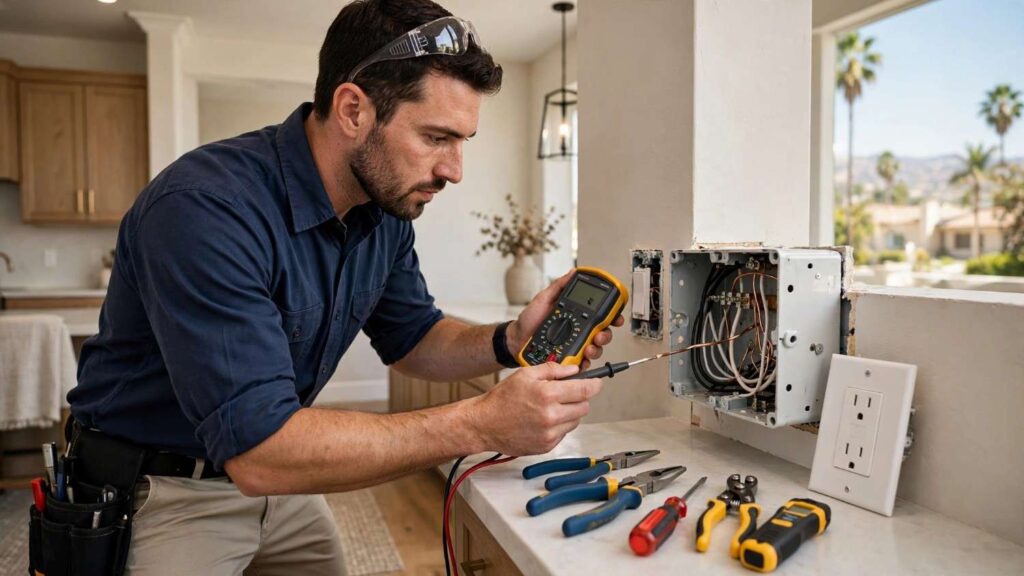
Loose wires cause a lot of small headaches. A quick tighten or splice often solves them.
If the wiring itself is healthy, repair works great. A pro reconnects the fault and tests the line.
You skip the big bill and keep your walls intact. Clean and simple.
Damaged Switches, Outlets, and Fixtures
A dead outlet doesn’t mean a dead system. It usually means one worn part.
Switches, outlets, and fixtures wear out over time. They’re cheap and fast to swap.
One visit fixes the flicker or the dead plug. Your daily routine barely skips a beat.
Isolated Electrical Faults
Got one problem in one spot? That’s a repair, not a rebuild.
Isolated faults stay in their lane. They don’t signal a system wide failure.
A good electrician traces it, fixes it, and confirms the rest is fine. Job done, worry gone.
When Electrical Replacement Becomes Necessary
But some problems run deeper. Patching them just wastes cash. Here’s when replacement is the honest answer.
Severely Damaged Electrical Components
Burned or melted parts can’t be patched safely. They must go.
Fire risk climbs when components are charred inside. A quick fix here is a gamble you don’t want.
Replacement removes the danger for good. That’s real relief, not a band aid.
Outdated or Failing Electrical Systems
Old panels and old wiring reach the end of the road. It happens to every system.
If your setup can’t keep up, replace it. Fuse boxes and cloth wiring belong in the past.
A modern system handles your real power load. It runs cooler, safer, and smoother.
You also stop the slow drip of repair bills. One solid upgrade often beats five small fixes. That’s math your wallet will thank you for.
Repeated Electrical Failures
Fixing the same thing over and over? That’s your system waving a red flag.
Repeat failures mean the root problem is bigger. Patches only buy short time.
Replacement stops the cycle. You pay once and move on with your life.
Electrical Systems That Cannot Safely Support the Home
Modern homes eat power. Old systems just can’t feed them.
An overloaded system trips, overheats, and fails. It puts your home at risk.
When your wiring can’t handle daily life, replace it. Your home deserves a system that keeps up.
Electrical Warning Signs Fort Lauderdale Homeowners Should Not Ignore
Your home talks to you. You just have to listen. These signs mean call a pro now.
Flickering or Frequently Dimming Lights
Lights that flicker often point to a wiring issue. Not just a bad bulb.
If it happens across rooms, take it seriously. Your circuits may be strained or loose.
Don’t brush it off. Small flickers can hint at bigger trouble inside the walls.
Burning Smells or Discolored Outlets
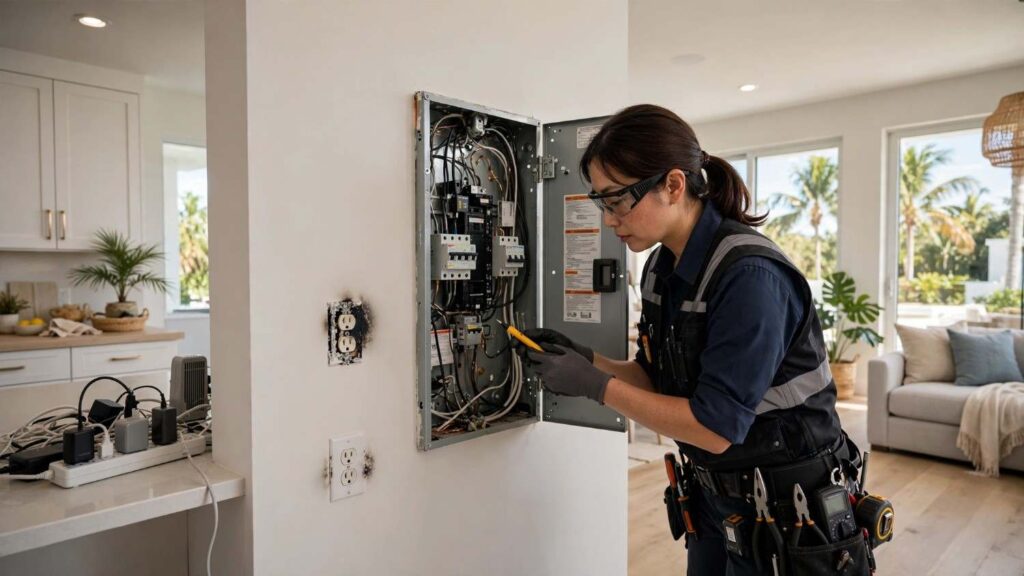
A burning smell near an outlet is an emergency. Full stop.
Brown or black marks mean heat damage. That’s a fire waiting to happen.
Cut the power to that area. Then call an electrician right away. Please don’t wait on this one.
Frequently Tripping Breakers
Breakers trip to protect you. That’s their job.
But constant tripping means your system is overloaded. Or something is failing.
One trip is fine. Daily trips are not. Get it checked before it gets worse.
Warm or Sparking Electrical Components
Touch a warm outlet? That’s a bad sign.
Heat and sparks mean danger. Both point to loose wires or overloaded lines.
Stop using that outlet. Call a pro to inspect it fast. Safety first, always.
How the Electrical Problem Affects the Repair-or-Replacement Decision
The problem itself often makes the choice for you. Let’s see how.
Scope of the Electrical Work
Small scope means repair. Big scope means replace. It’s that basic.
One faulty outlet is a repair. Rewiring a whole floor leans toward replacement.
Match the fix to the size of the problem. That keeps your money working smart.
Accessibility of the Affected Area
Where’s the fault hiding? That changes everything.
Easy access keeps repair cheap. Hard access can push you toward a bigger plan.
If a wall must open anyway, replacement may cost less in the long run. Ask your electrician to weigh it.
Code Compliance Requirements
Codes exist to keep you safe. And they must be met.
Old work sometimes fails today’s codes. A simple repair might trigger a required upgrade.
A licensed pro knows when a fix must become a replacement. They keep you legal and safe.
Expected Service Life After the Work
Think past today. How long will this fix hold?
A repair on an old system may fail again soon. A replacement lasts for decades.
Weigh the years you buy against the price you pay. That’s how you get real value.
Fort Lauderdale Home Electrical Systems That May Need Special Attention
Some parts of your home need extra eyes. Our climate makes sure of it.
Electrical Panels
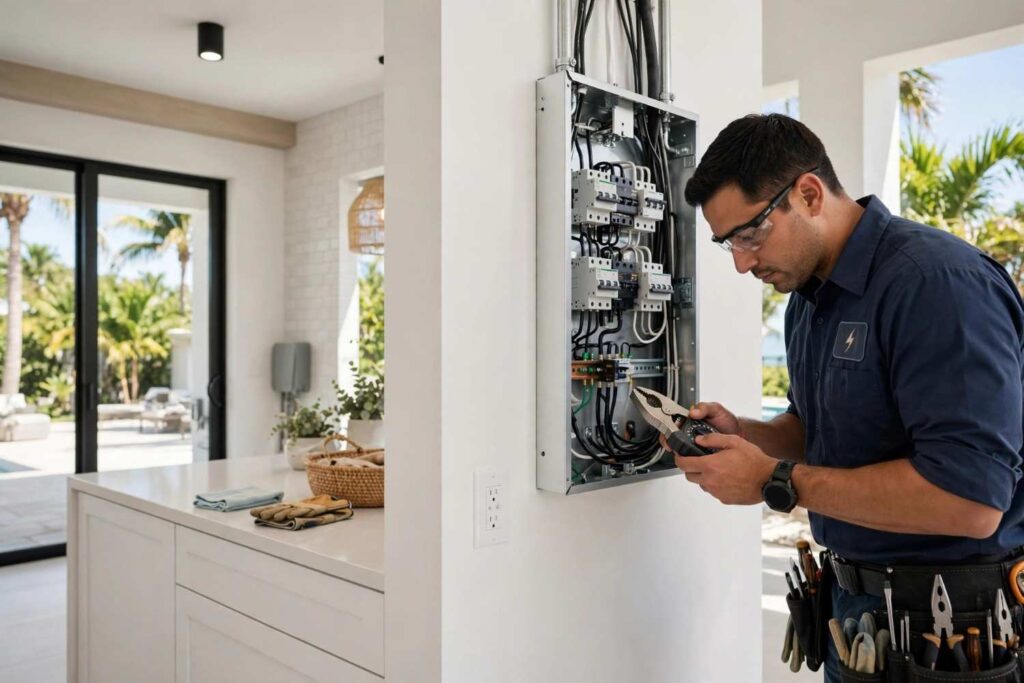
Your panel is the heart of your power. When it ages, everything suffers.
Old panels can’t handle modern loads. Some brands are known fire risks and need replacing.
A panel upgrade is one of the best safety moves you can make. It powers your home right.
Some homes still run panels from brands later flagged for faults. If yours is one, don’t wait. A swap here buys real safety.
Branch Wiring and Circuits
Wiring runs behind every wall. And it wears out with time.
Damaged circuits cause flickers, trips, and dead spots. Sometimes they hide for years.
A pro maps your circuits and finds weak points. Then they repair or replace as needed.
Outlets, Switches, and Fixtures
These are the parts you touch daily. So they wear the fastest.
Loose or hot outlets need quick attention. Kitchens and baths need GFCI protection too.
Most of these are simple repairs. But safe outlets protect your whole family.
Outdoor Electrical Components
Outside gear faces the full South Florida beating. Rain, sun, and salt all attack it.
Outdoor outlets, lights, and connections corrode fast. Water and power are a dangerous mix.
Regular checks keep them safe. Weatherproof parts hold up far longer down here.
A Practical Repair-or-Replacement Decision Checklist
Feeling stuck? Use this simple checklist. It turns a hard call into clear steps.
Get a Professional Electrical Assessment
Start with a real inspection. Guessing is how people overpay or stay unsafe.
A licensed electrician sees what you can’t. They test, measure, and explain your options.
This one step saves the most money. It’s the smartest place to begin.
Ask them to rank each issue. What’s urgent? What can wait? A good pro sorts it out in plain words.
Compare the Immediate Repair Scope
Ask what the fix covers right now. Then ask what it leaves out.
A small, clean repair is often the right first move. But know its limits.
If the patch ignores a deeper issue, factor that in. Clear eyes, good choice.
Consider Future Electrical Needs
Are you adding an EV charger? A new kitchen? More AC?
Plan for the power you’ll need tomorrow. Not just today.
A system built for growth saves you from a redo. That’s pride in a job done once and done right.
Review Safety and Code Requirements
Safety comes before savings. Every single time.
Make sure the work meets local codes. It protects your family and your home value.
A trusted local team handles permits and inspections. You get safe work and full peace of mind.
Make the Call With Confidence
So, repair or replace? Now you can answer that with real facts, not fear.
Small, isolated problems usually call for a repair. Old, unsafe, or repeat issues call for replacement. Your home and your gut will tell you which.
You belong to a community that looks out for each other. Getting your electrical right is part of that. It keeps your family safe and your home strong.
When you want a straight, honest read, reach out to the local pros. Flowtron Electric Inc. serves Fort Lauderdale and the greater Miami-Dade and South Florida area. Call (954) 945-1123 and get clear answers today.
Your power should just work. Let’s keep it that way.
Frequently Asked Questions
1. How do I know if I need electrical repair or replacement?
Start with a pro inspection. Small, single faults usually mean repair. Old systems, burned parts, or repeat failures usually mean replacement. A licensed electrician gives you the honest call.
2. Is electrical repair cheaper than replacement?
Yes, repairs cost less up front. But patching an old, failing system can cost more over time. Weigh the price against the years of safety you actually get.
3. What are the top warning signs I should call an electrician fast?
Watch for burning smells, discolored outlets, and warm or sparking parts. Frequent breaker trips and flickering lights matter too. These signs mean call a pro right away.
4. Do I need a permit for electrical work in Fort Lauderdale?
Big jobs like panel swaps and rewiring need permits here. Permits keep your home safe, insured, and sale ready. A licensed local team pulls them for you.
5. How long does an electrical panel last in South Florida?
A quality panel can last decades. But our heat, humidity, and salt air speed up wear. Regular checks help you catch problems before they turn serious. You can also mix repair and replacement in one project when it fits your budget.
